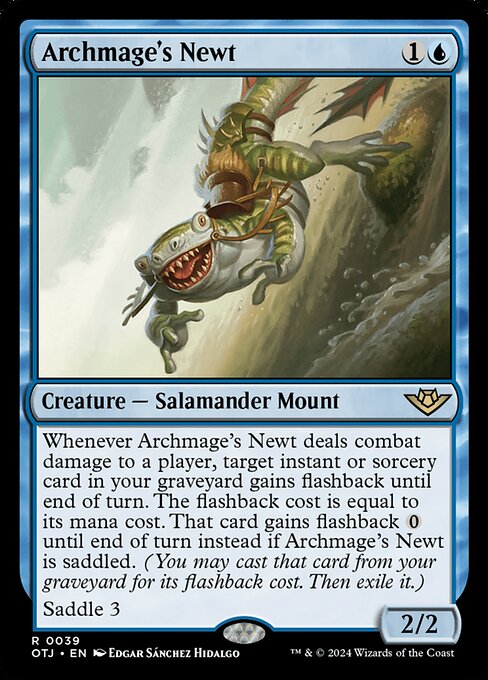
Creature — Salamander Mount
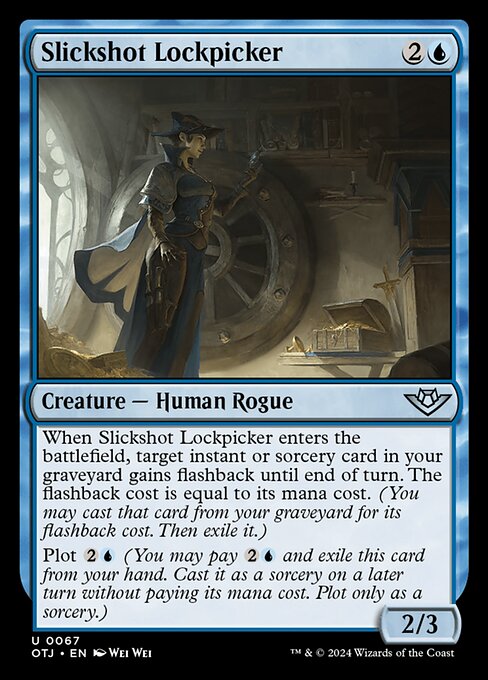
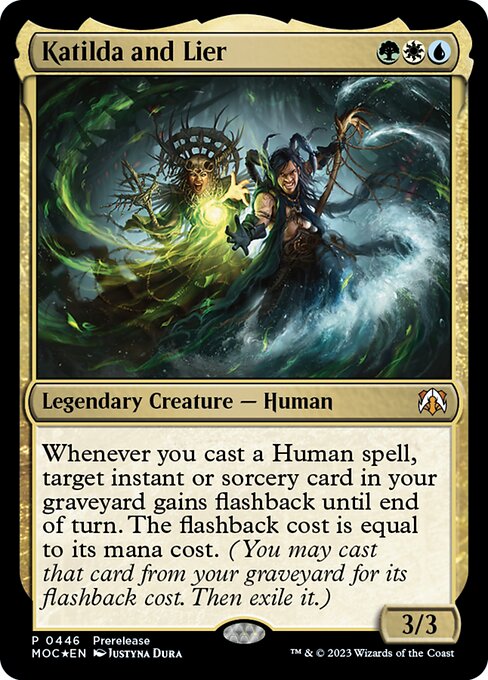
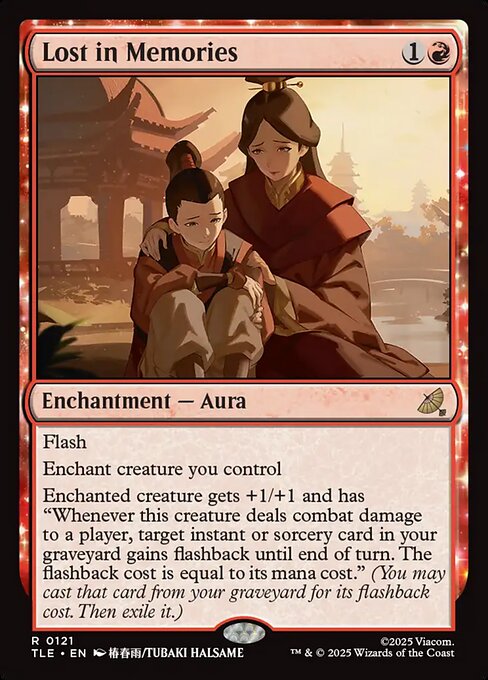
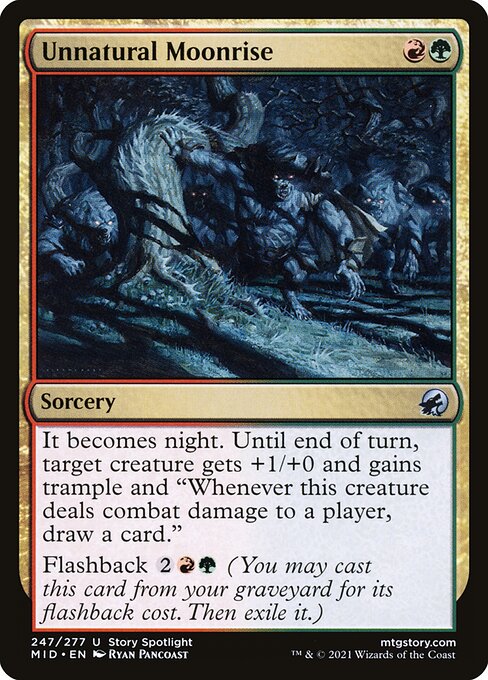
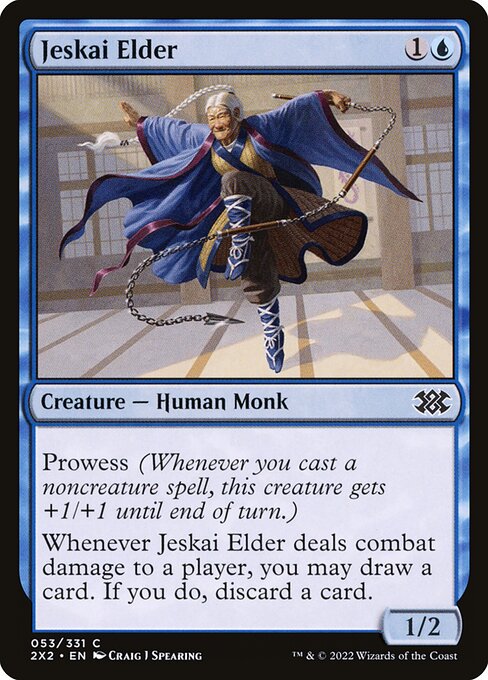
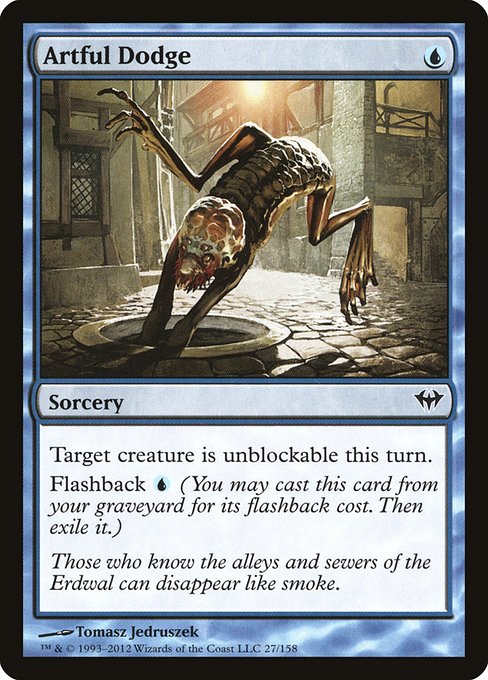
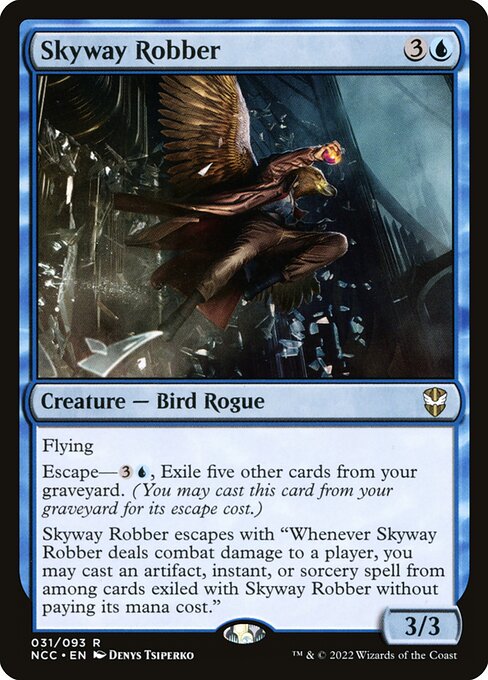
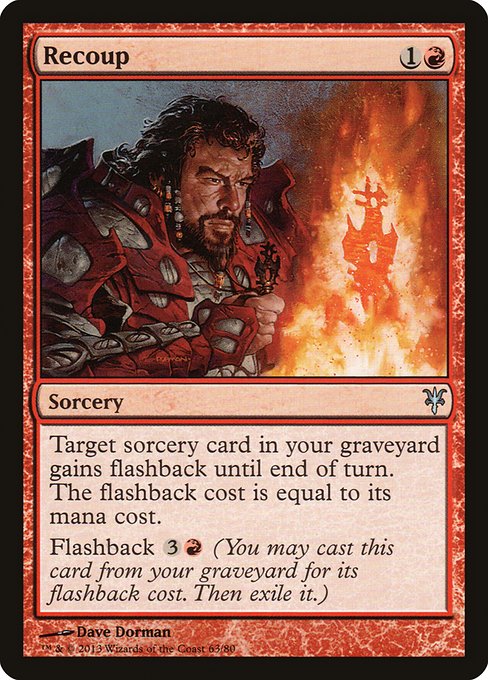
Whenever this creature deals combat damage to a player, target instant or sorcery card in your graveyard gains flashbackFlashback appears on some instants and sorceries. It represents two static abilities: one that functions while the card is in a player’s graveyard and another that functions while the card is on the stack. “Flashback [cost]” means “You may cast this card from your graveyard if the resulting spell is an instant or sorcery spell by paying [cost] rather than paying its mana cost” and “If the flashback cost was paid, exile this card instead of putting it anywhere else any time it would leave the stack.” Casting a spell using its flashback ability follows the rules for paying alternative costs in rules 601.2b and 601.2f–h. (CR 702.34) until end of turn. The flashbackFlashback appears on some instants and sorceries. It represents two static abilities: one that functions while the card is in a player’s graveyard and another that functions while the card is on the stack. “Flashback [cost]” means “You may cast this card from your graveyard if the resulting spell is an instant or sorcery spell by paying [cost] rather than paying its mana cost” and “If the flashback cost was paid, exile this card instead of putting it anywhere else any time it would leave the stack.” Casting a spell using its flashback ability follows the rules for paying alternative costs in rules 601.2b and 601.2f–h. (CR 702.34) cost is equal to its mana cost. That card gains flashbackFlashback appears on some instants and sorceries. It represents two static abilities: one that functions while the card is in a player’s graveyard and another that functions while the card is on the stack. “Flashback [cost]” means “You may cast this card from your graveyard if the resulting spell is an instant or sorcery spell by paying [cost] rather than paying its mana cost” and “If the flashback cost was paid, exile this card instead of putting it anywhere else any time it would leave the stack.” Casting a spell using its flashback ability follows the rules for paying alternative costs in rules 601.2b and 601.2f–h. (CR 702.34) {0} until end of turn instead if this creature is saddled. (You may castTo cast a spell is to take it from the zone it’s in (usually the hand), put it on the stack, and pay its costs, so that it will eventually resolve and have its effect. A player may cast a spell if they have priority. See rule 601, “Casting Spells.”
To cast a card is to cast it as a spell. (CR 701.5) that card from your graveyard for its flashbackFlashback appears on some instants and sorceries. It represents two static abilities: one that functions while the card is in a player’s graveyard and another that functions while the card is on the stack. “Flashback [cost]” means “You may cast this card from your graveyard if the resulting spell is an instant or sorcery spell by paying [cost] rather than paying its mana cost” and “If the flashback cost was paid, exile this card instead of putting it anywhere else any time it would leave the stack.” Casting a spell using its flashback ability follows the rules for paying alternative costs in rules 601.2b and 601.2f–h. (CR 702.34) cost. Then exileTo exile an object, move it to the exile zone from wherever it is. See rule 406, “Exile.” (CR 701.13) it.)
SaddleSaddle is an activated ability. “Saddle N” means “Tap any number of other untapped creatures you control with total power N or greater: This permanent becomes saddled until end of turn. Activate only as a sorcery.”
Saddled is a designation that has no rules meaning other than to act as a marker that spells and abilities can identify. Only permanents can be or become saddled. Once a permanent has become saddled, it stays saddled until the end of the turn or it leaves the battlefield. Being saddled is not a part of the permanent’s copiable values.
A creature “saddles” a permanent as it’s tapped to pay the cost to activate a permanent’s saddle ability. (CR 702.171) 3
$0.21
Commander: LegalModern: Legal
Save this card
Log in to save cards to your lists.
Start a deck with this cardTags and classifications
Card attributes are distinct from extracted ability facts and inferred themes. AI themes and predicted tags are suggestions, not rules text.
Ability tags
Mana costs
Creature kinds
Color identity
Keyword tags
Mana value
Theme tags
Timing tags
Type tags
Predicted tags are currently unavailable.