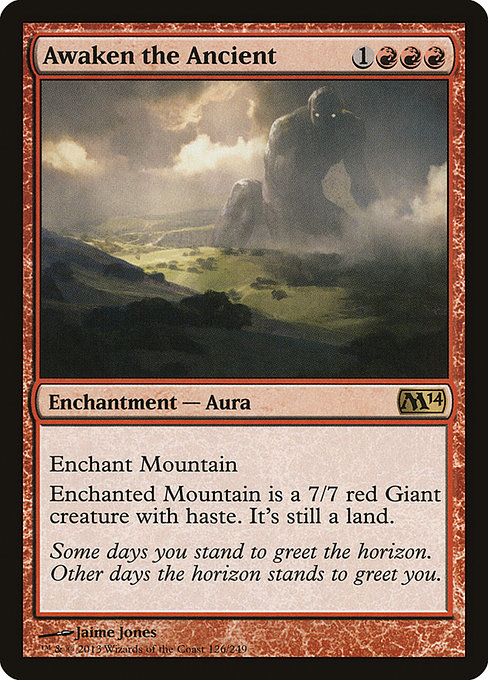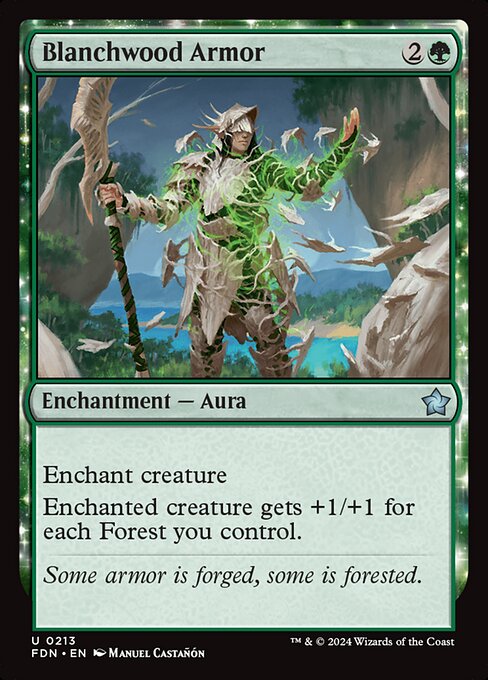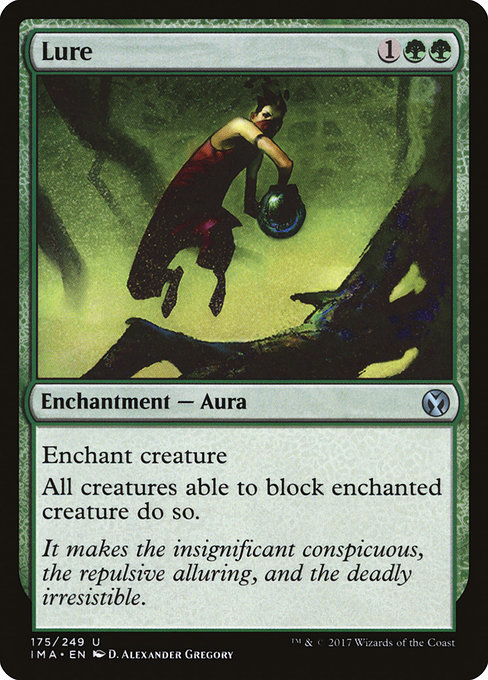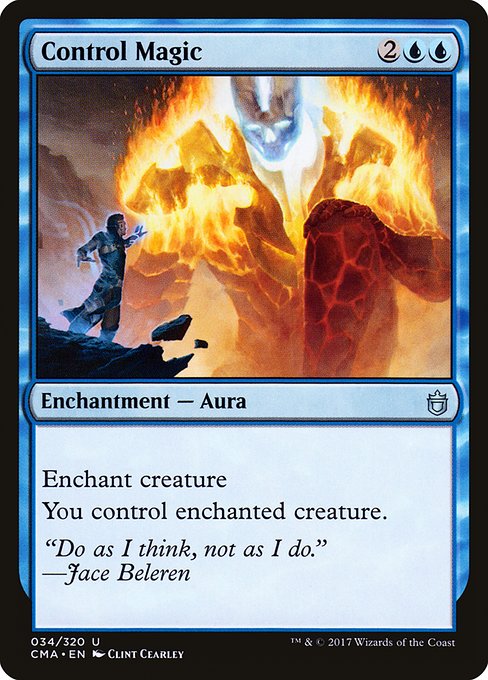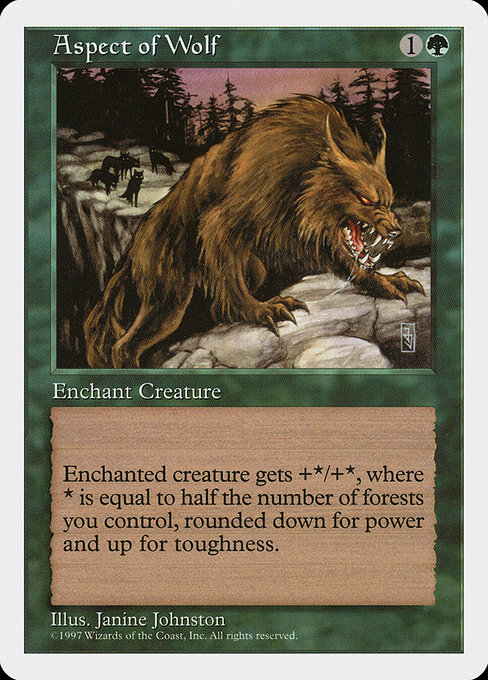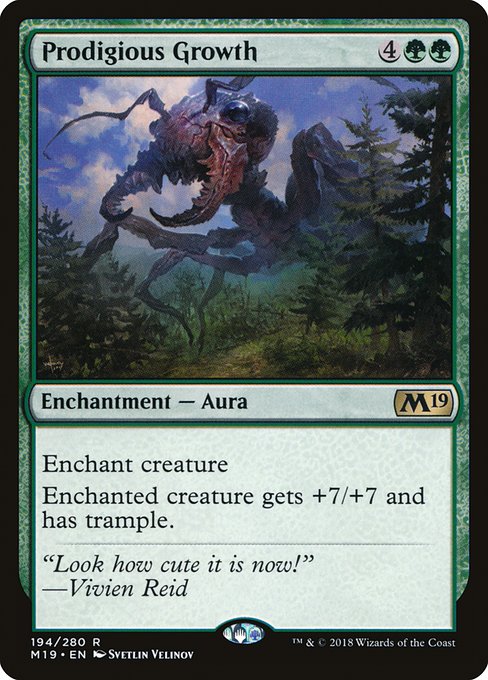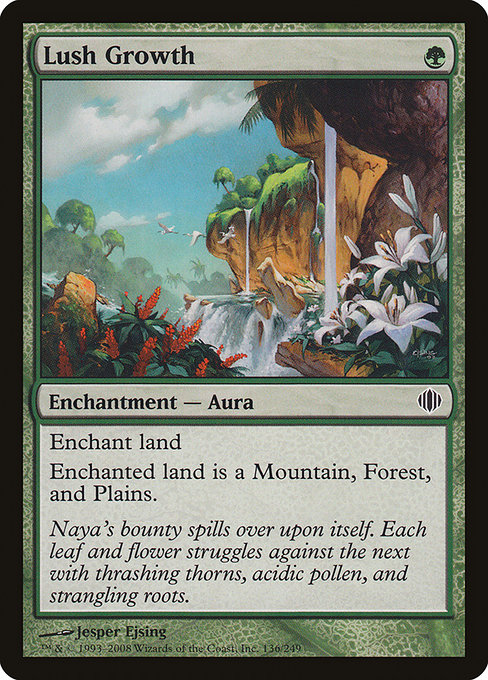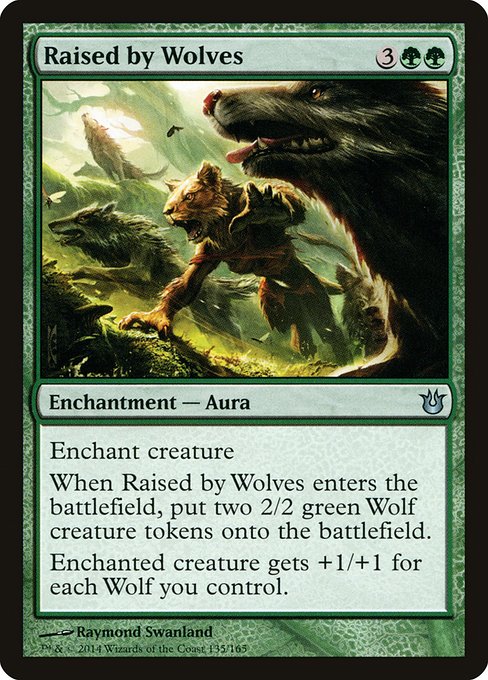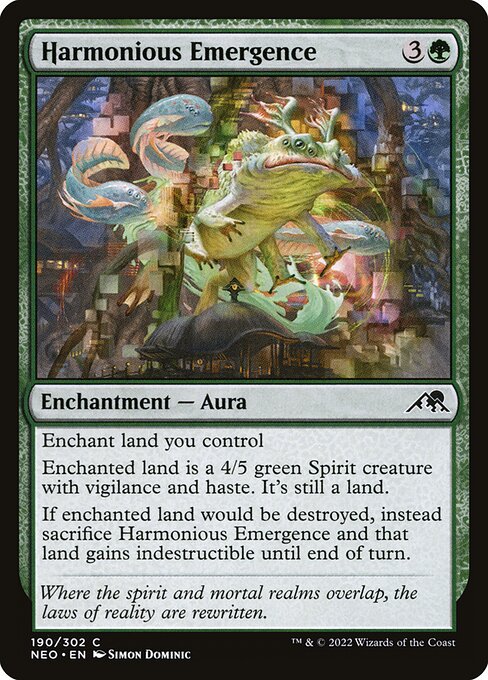
Enchantment — Aura
EnchantEnchant is a static ability, written “Enchant [object or player].” The enchant ability restricts what an Aura spell can target and what an Aura can enchant.
For more information about Auras, see rule 303, “Enchantments.”
If an Aura has multiple instances of enchant, all of them apply. The Aura’s target must follow the restrictions from all the instances of enchant. The Aura can enchant only objects or players that match all of its enchant abilities.
Auras that can enchant a player can target and be attached to players. Such Auras can’t target permanents and can’t be attached to permanents. (CR 702.5) land you control
Enchanted land is a 4/5 green Spirit creature with vigilanceVigilance is a static ability that modifies the rules for the declare attackers step.
Attacking doesn’t cause creatures with vigilance to tap. (See rule 508, “Declare Attackers Step.”)
Multiple instances of vigilance on the same creature are redundant. (CR 702.20) and hasteHaste is a static ability.
If a creature has haste, it can attack even if it hasn’t been controlled by its controller continuously since their most recent turn began. (See rule 302.6.)
If a creature has haste, its controller can activate its activated abilities whose cost includes the tap symbol or the untap symbol even if that creature hasn’t been controlled by that player continuously since their most recent turn began. (See rule 302.6.)
Multiple instances of haste on the same creature are redundant. (CR 702.10). It's still a land.
If enchanted land would be destroyed, instead sacrificeTo sacrifice a permanent, its controller moves it from the battlefield directly to its owner’s graveyard. A player can’t sacrifice something that isn’t a permanent, or something that’s a permanent they don’t control. Sacrificing a permanent doesn’t destroy it, so regeneration or other effects that replace destruction can’t affect this action. (CR 701.21) this Aura and that land gains indestructibleIndestructible is a static ability.
A permanent with indestructible can’t be destroyed. Such permanents aren’t destroyed by lethal damage, and they ignore the state-based action that checks for lethal damage (see rule 704.5g).
Multiple instances of indestructible on the same permanent are redundant. (CR 702.12) until end of turn.
$0.16
Commander: LegalModern: Legal
Save this card
Log in to save cards to your lists.
Start a deck with this cardTags and classifications
Card attributes are distinct from extracted ability facts and inferred themes. AI themes and predicted tags are suggestions, not rules text.
Ability tags
Mana costs
Color identity
Keyword tags
Mana value
Timing tags
Type tags
Predicted tags are currently unavailable.