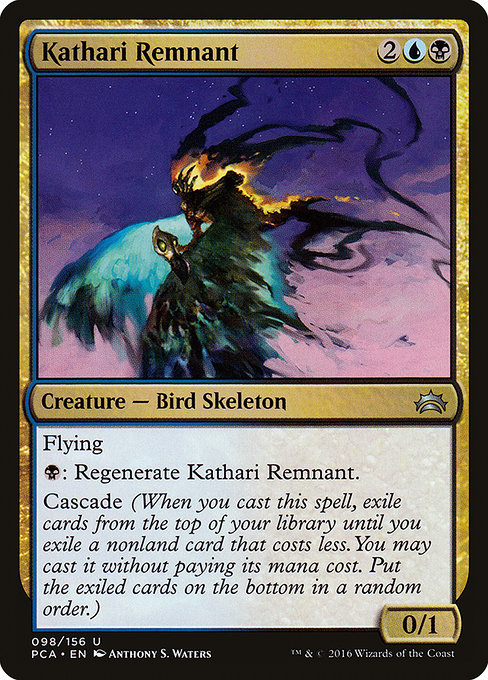
Creature — Bird Skeleton
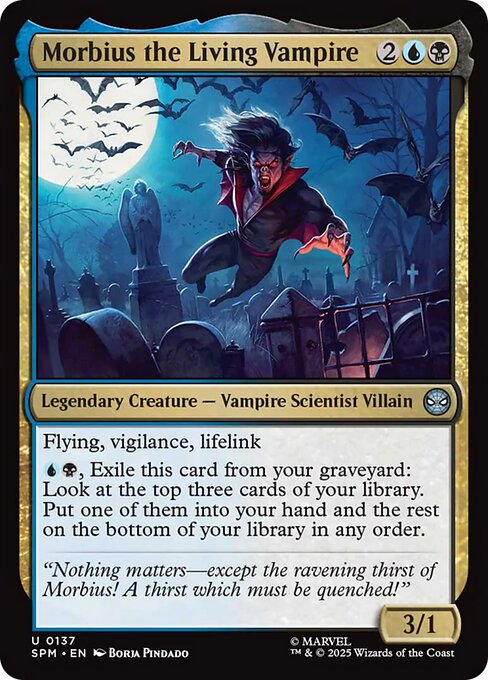
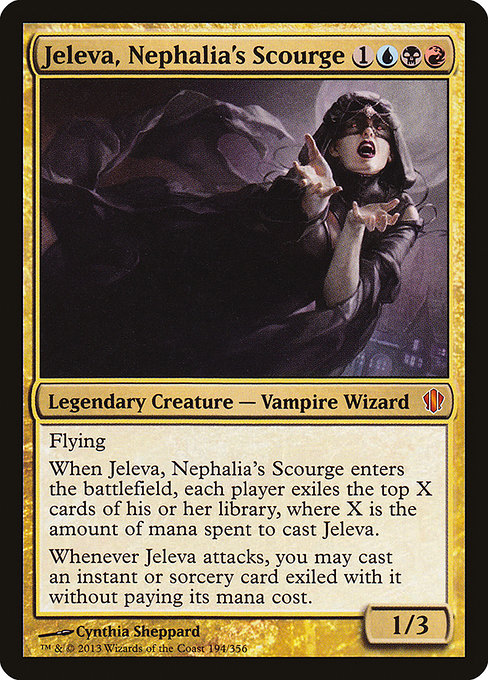
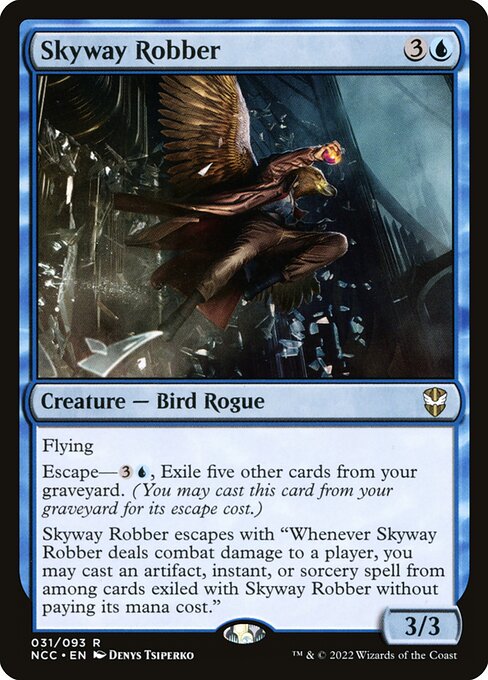
FlyingFlying is an evasion ability.
A creature with flying can’t be blocked except by creatures with flying and/or reach. A creature with flying can block a creature with or without flying. (See rule 509, “Declare Blockers Step,” and rule 702.17, “Reach.”)
Multiple instances of flying on the same creature are redundant. (CR 702.9)
: RegenerateIf the effect of a resolving spell or ability regenerates a permanent, it creates a replacement effect that protects the permanent the next time it would be destroyed this turn. In this case, “Regenerate [permanent]” means “The next time [permanent] would be destroyed this turn, instead remove all damage marked on it and its controller taps it. If it’s an attacking or blocking creature, remove it from combat.”
If the effect of a static ability regenerates a permanent, it replaces destruction with an alternate effect each time that permanent would be destroyed. In this case, “Regenerate [permanent]” means “Instead remove all damage marked on [permanent] and its controller taps it. If it’s an attacking or blocking creature, remove it from combat.”
Neither activating an ability that creates a regeneration shield nor casting a spell that creates a regeneration shield is the same as regenerating a permanent. Effects that say that a permanent can’t be regenerated don’t preclude such abilities from being activated or such spells from being cast; rather, they cause regeneration shields to not be applied. (CR 701.19) this creature.
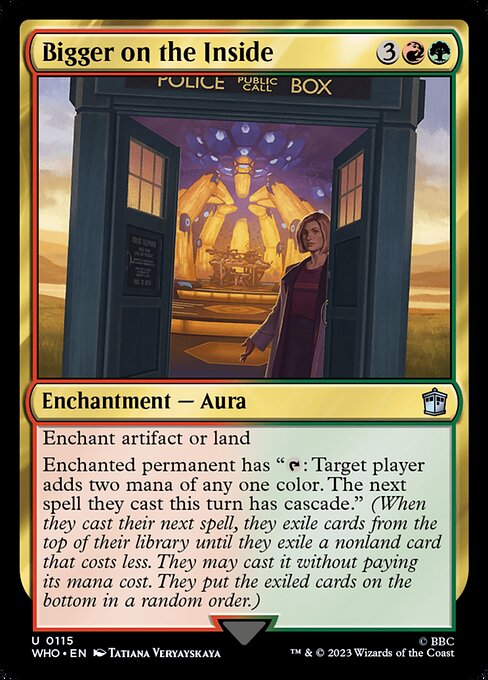
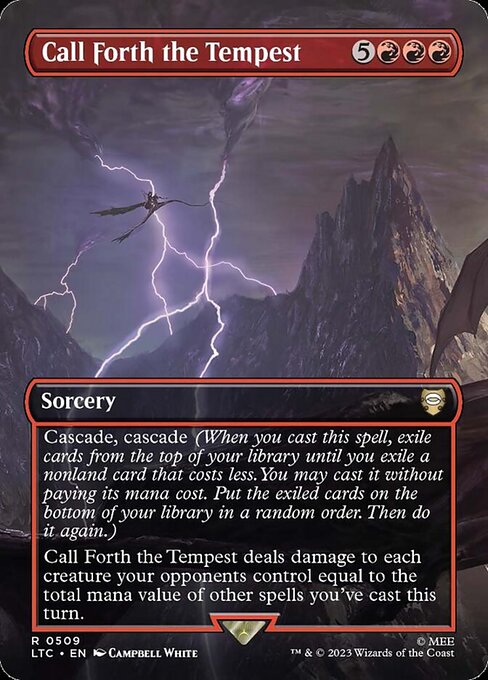
CascadeCascade is a triggered ability that functions only while the spell with cascade is on the stack. “Cascade” means “When you cast this spell, exile cards from the top of your library until you exile a nonland card whose mana value is less than this spell’s mana value. You may cast that card without paying its mana cost if the resulting spell’s mana value is less than this spell’s mana value. Then put all cards exiled this way that weren’t cast on the bottom of your library in a random order.”
If an effect allows a player to take an action with one or more of the exiled cards “as you cascade,” the player may take that action after they have finished exiling cards due to the cascade ability. This action is taken before choosing whether to cast the last exiled card or, if no appropriate card was exiled, before putting the exiled cards on the bottom of their library in a random order.
If a spell has multiple instances of cascade, each triggers separately. (CR 702.85) (When you castTo cast a spell is to take it from the zone it’s in (usually the hand), put it on the stack, and pay its costs, so that it will eventually resolve and have its effect. A player may cast a spell if they have priority. See rule 601, “Casting Spells.”
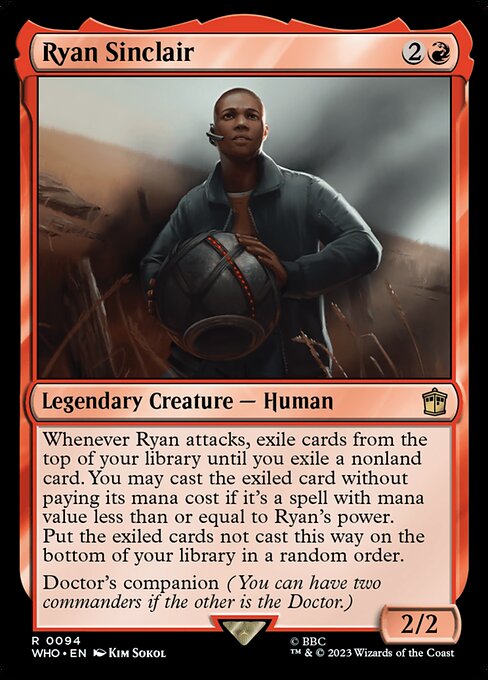
To cast a card is to cast it as a spell. (CR 701.5) this spell, exileTo exile an object, move it to the exile zone from wherever it is. See rule 406, “Exile.” (CR 701.13) cards from the top of your library until you exileTo exile an object, move it to the exile zone from wherever it is. See rule 406, “Exile.” (CR 701.13) a nonland card that costs less. You may castTo cast a spell is to take it from the zone it’s in (usually the hand), put it on the stack, and pay its costs, so that it will eventually resolve and have its effect. A player may cast a spell if they have priority. See rule 601, “Casting Spells.”
To cast a card is to cast it as a spell. (CR 701.5) it without paying its mana cost. Put the exiled cards on the bottom in a random order.)
$0.29
Commander: LegalModern: Legal
Save this card
Log in to save cards to your lists.
Start a deck with this cardTags and classifications
Card attributes are distinct from extracted ability facts and inferred themes. AI themes and predicted tags are suggestions, not rules text.
Ability tags
Mana costs
Creature kinds
Color identity
Keyword tags
Mana value
Timing tags
Type tags
Predicted tags are currently unavailable.