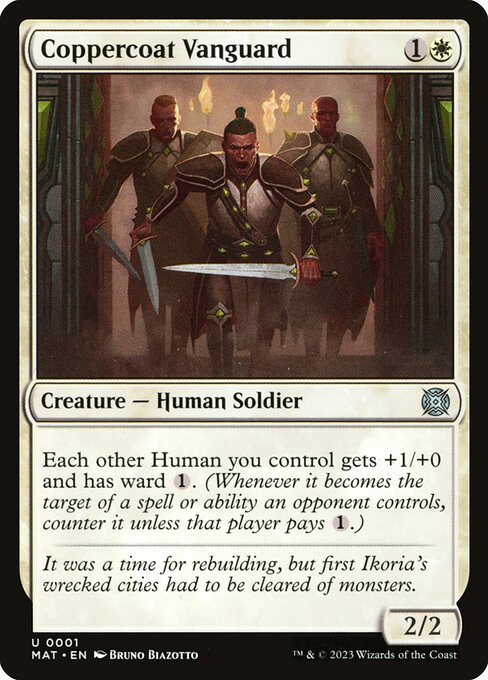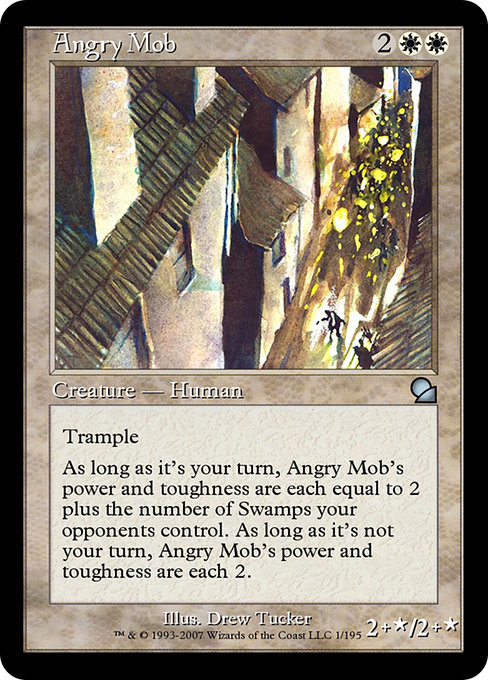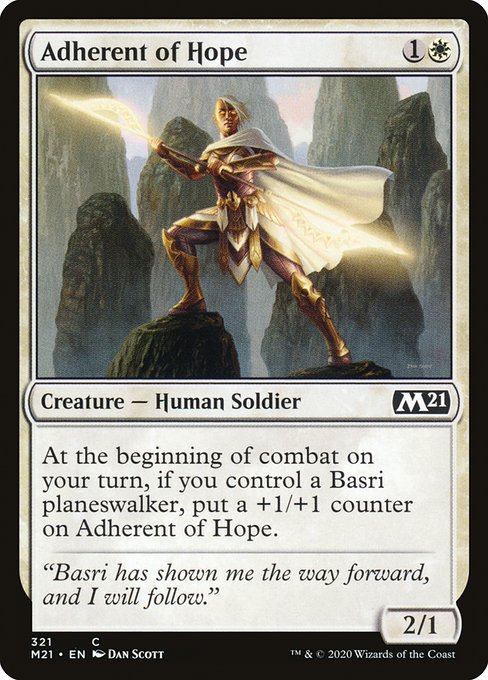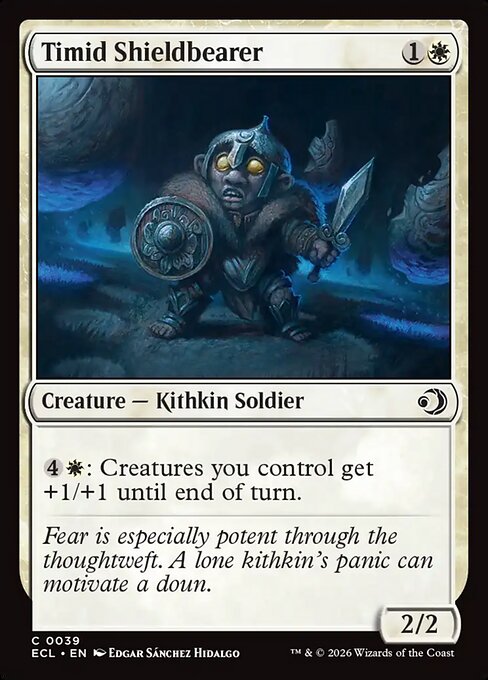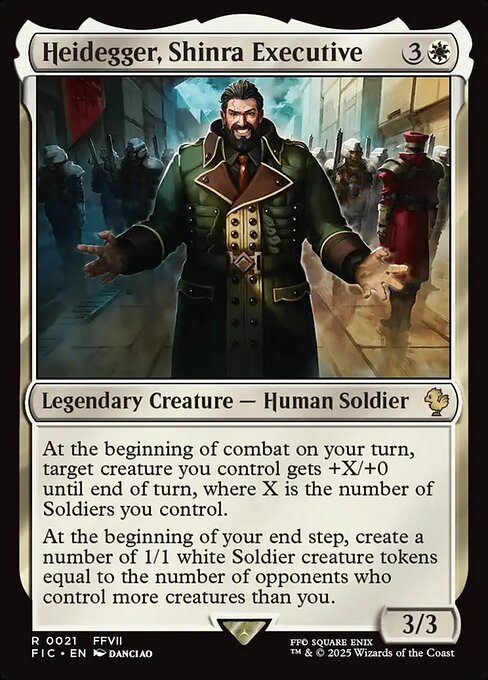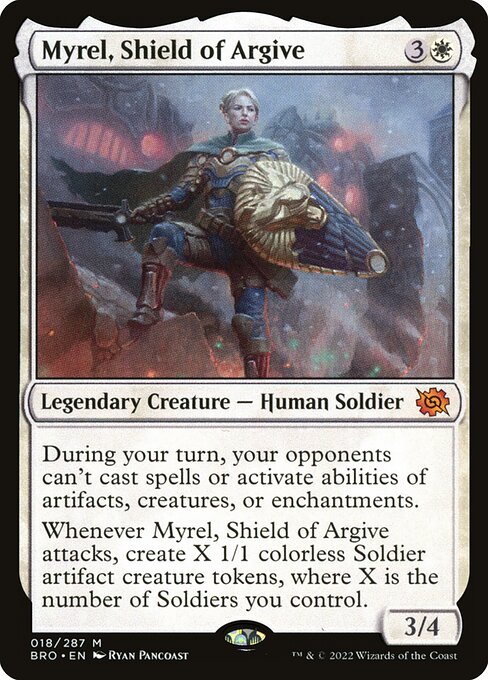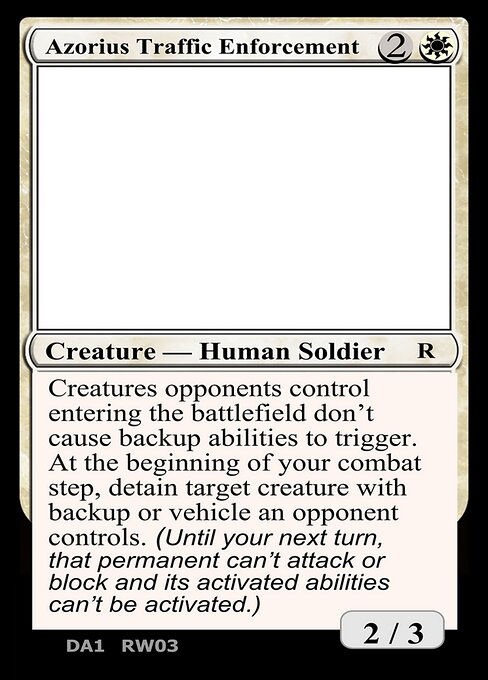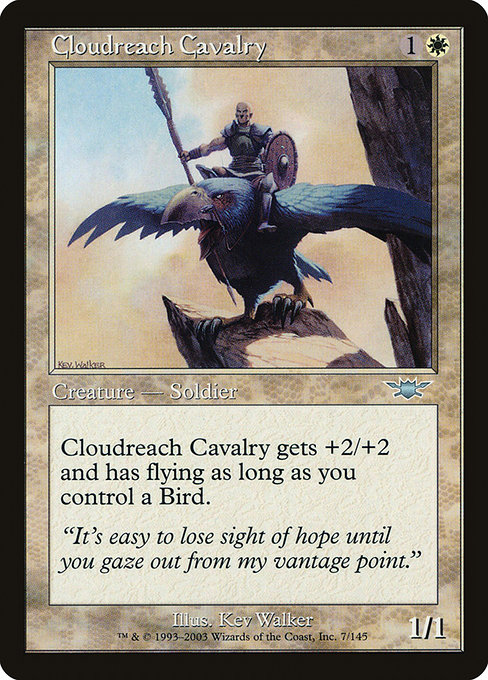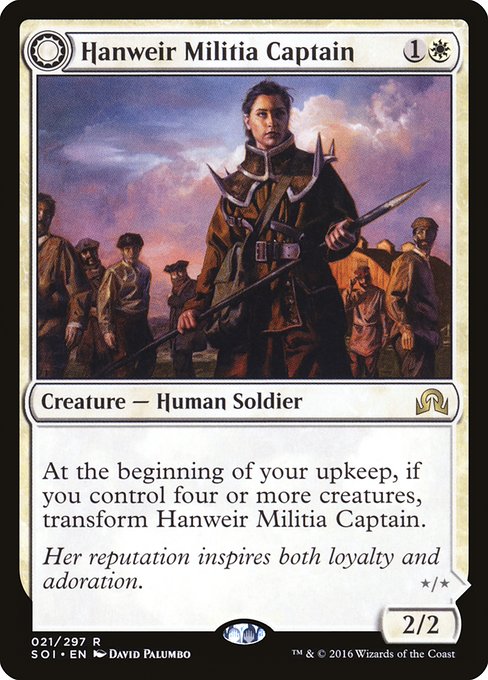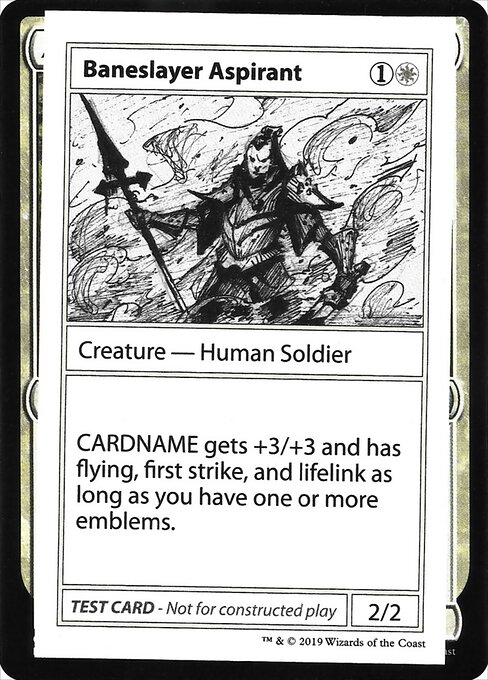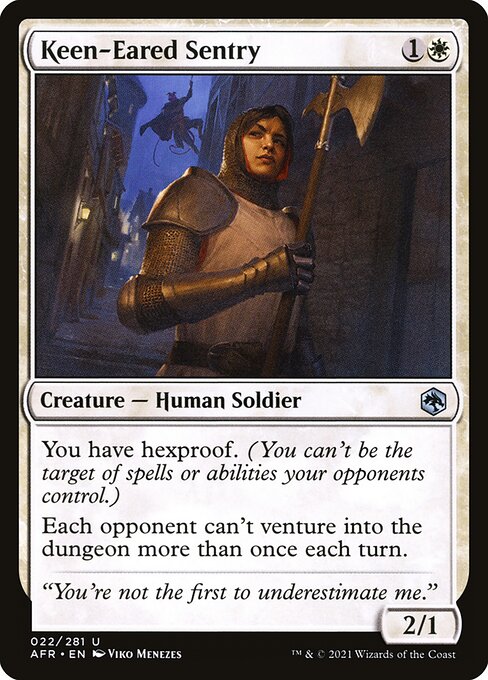
Creature — Human Soldier
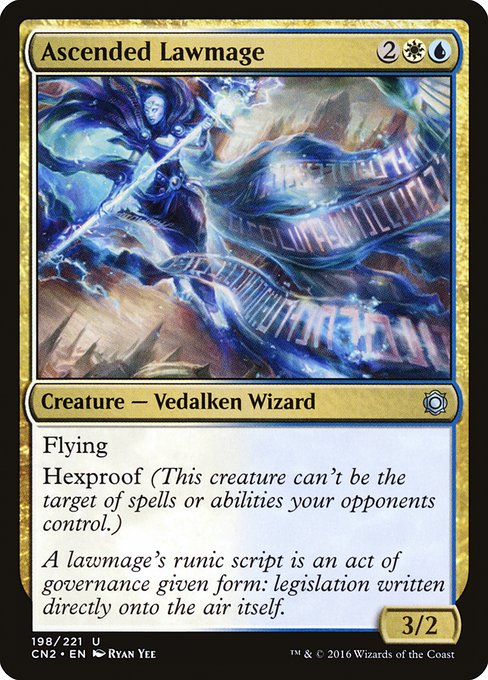
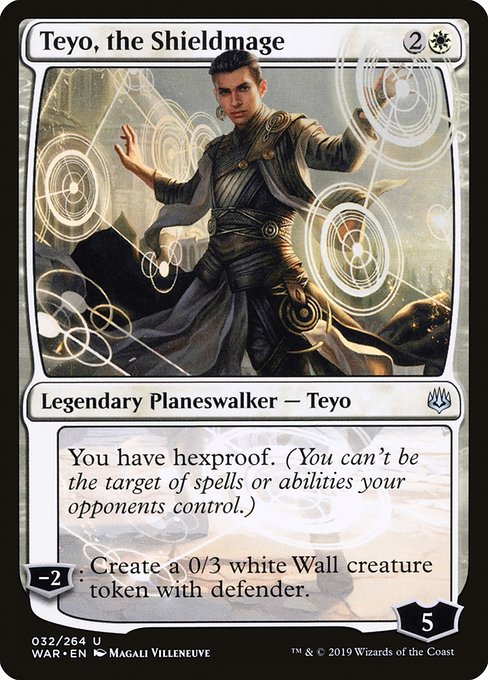
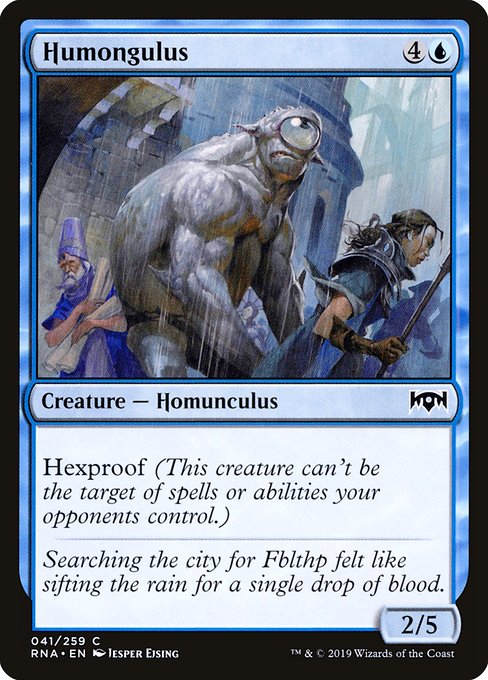
You have hexproofHexproof is a static ability.
“Hexproof” on a permanent means “This permanent can’t be the target of spells or abilities your opponents control.”
“Hexproof” on a player means “You can’t be the target of spells or abilities your opponents control.”
“Hexproof from [quality]” is a variant of the hexproof ability. “Hexproof from [quality]” on a permanent means “This permanent can’t be the target of [quality] spells your opponents control or abilities your opponents control from [quality] sources.” A “hexproof from [quality]” ability is a hexproof ability.
Any effect that causes an object to lose hexproof will cause an object to lose all “hexproof from [quality]” abilities. Any effect that allows a player to choose a creature with hexproof as a target as though it didn’t have hexproof will allow a player to choose a creature with a “hexproof from [quality]” ability. Any effect that looks for a card with hexproof will find a card with a “hexproof from [quality]” ability.
“Hexproof from [quality A] and from [quality B]” is shorthand for “hexproof from [quality A]” and “hexproof from [quality B]”; it behaves as two separate hexproof abilities.
“Hexproof from each [characteristic]” is shorthand for “hexproof from [quality A],” “hexproof from [quality B],” and so on for each possible quality the listed characteristic could have; it behaves as multiple separate hexproof abilities.
Multiple instances of the same hexproof ability on the same permanent or player are redundant. (CR 702.11). (You can't be the target of spells or abilities your opponents control.)
Each opponent can't venture into the dungeonIf a player is instructed to venture into the dungeon while they don’t own a dungeon card in the command zone, they choose a dungeon card they own from outside the game and put it into the command zone. They put their venture marker on the topmost room. See rule 309, “Dungeons.”
If a player is instructed to venture into the dungeon while their venture marker is in any room except a dungeon card’s bottommost room, they choose an adjacent room, following the direction of an arrow pointing away from their current room. If there are multiple arrows pointing away from the room the player’s venture marker is in, they choose one of them to follow. They move their venture marker to that adjacent room.
If a player is instructed to venture into the dungeon while their venture marker is in the bottommost room of a dungeon card, they remove that dungeon card from the game. Doing so causes the player to complete that dungeon (see rule 309.7). They then choose an appropriate dungeon card they own from outside the game, put it into the command zone, and put their venture marker on the topmost room of that dungeon.
Venture into [quality] is a variant of venture into the dungeon. If a player is instructed to “venture into [quality]” while they don’t own a dungeon card in the command zone, they choose a dungeon card they own from outside the game with the indicated quality and put it into the command zone. They put their venture marker on the topmost room of that dungeon. If they already own a dungeon card in the command zone, they follow the normal procedure for venturing into the dungeon outlined in 701.49b–c. (CR 701.49) more than once each turn.
$0.19
Commander: LegalModern: Legal
Save this card
Log in to save cards to your lists.
Start a deck with this cardTags and classifications
Card attributes are distinct from extracted ability facts and inferred themes. AI themes and predicted tags are suggestions, not rules text.
Ability tags
Mana costs
Creature kinds
Classes and roles
Color identity
Keyword tags
Mana value
Timing tags
Type tags
Predicted tags are currently unavailable.