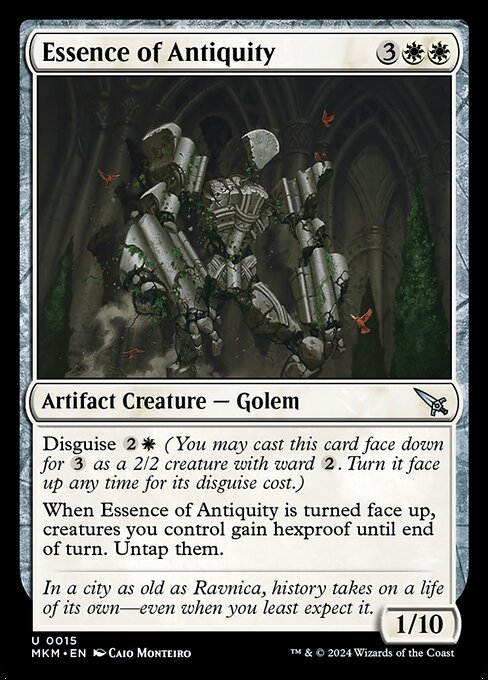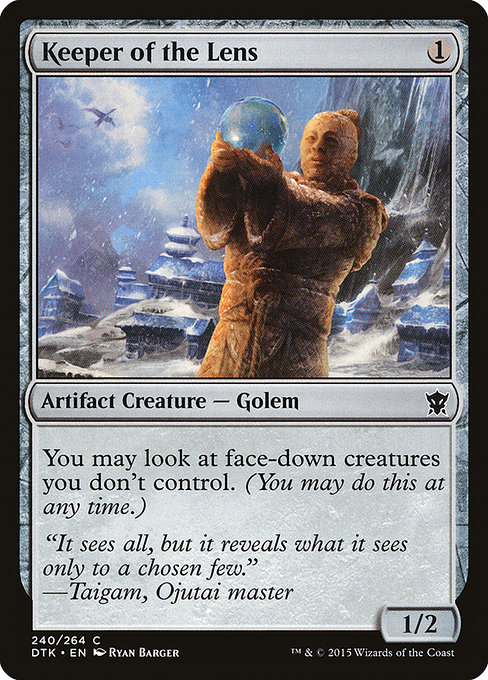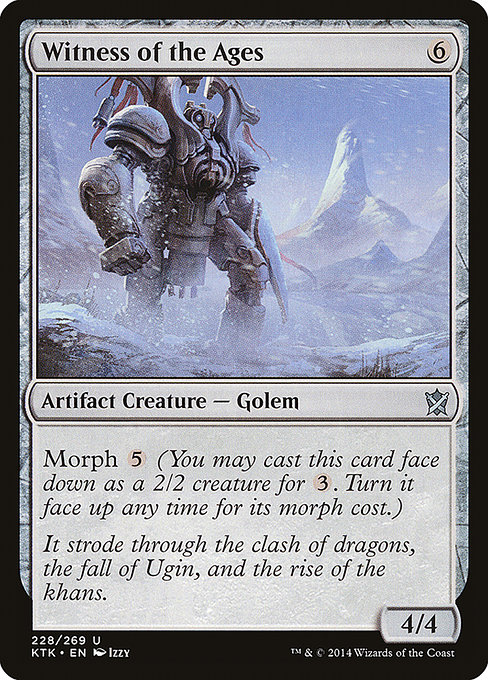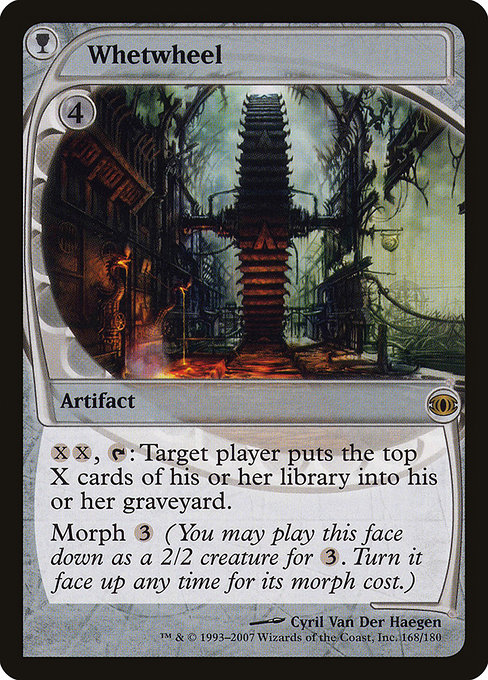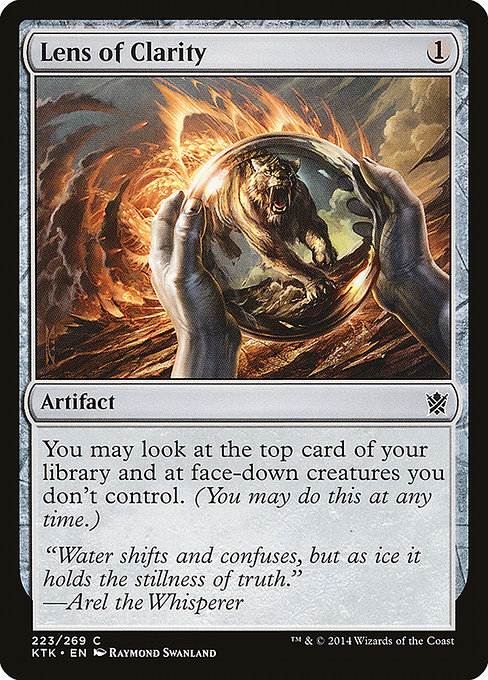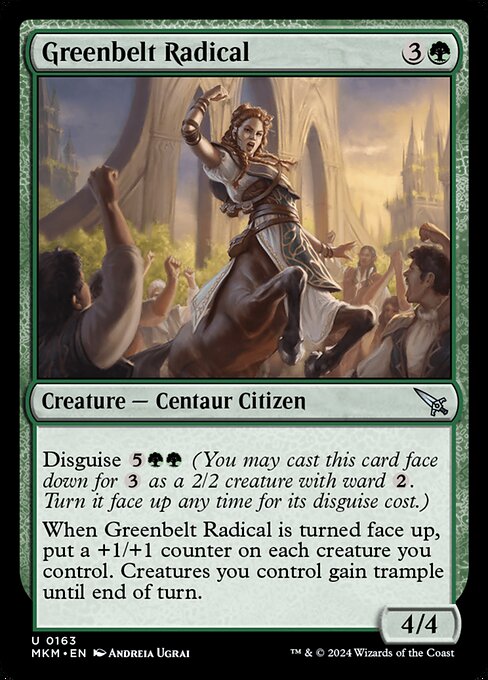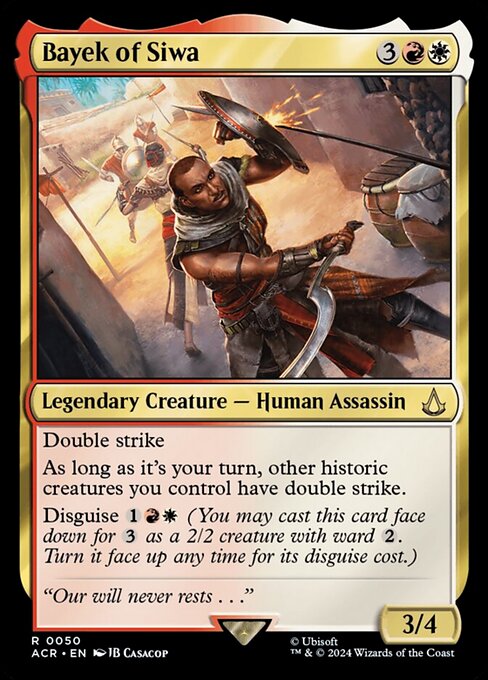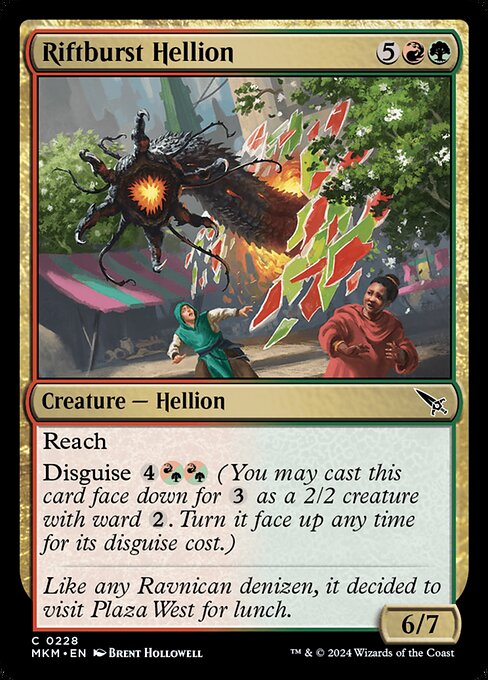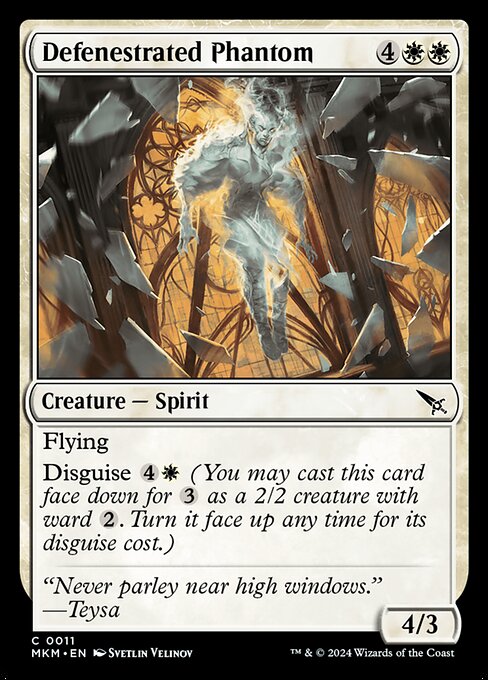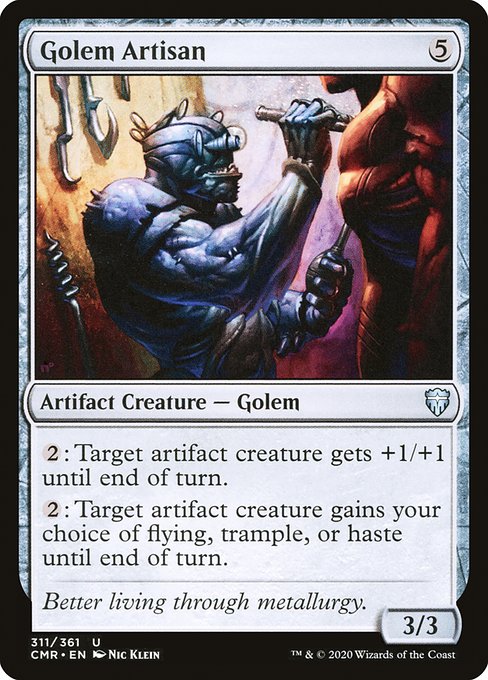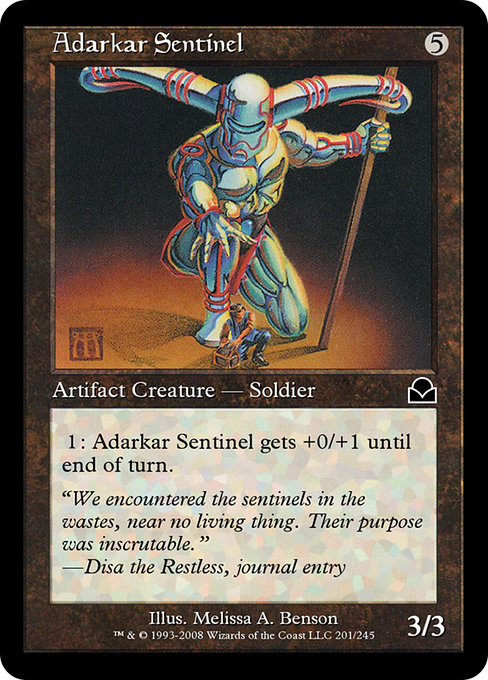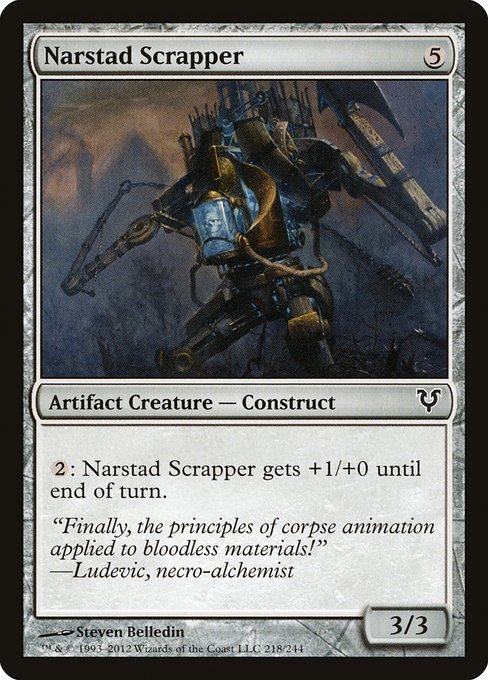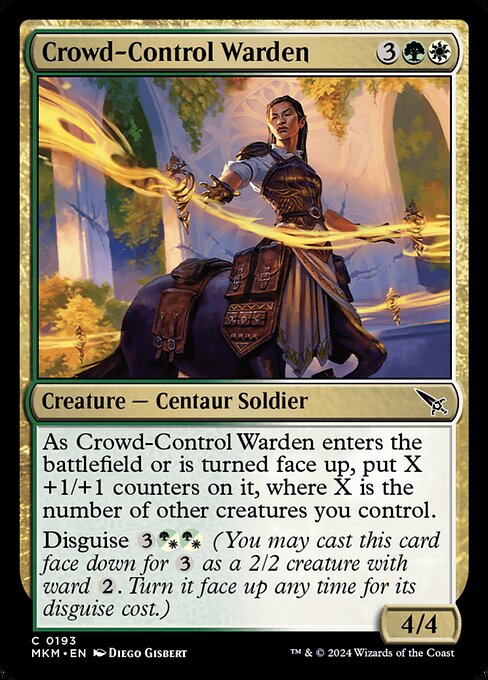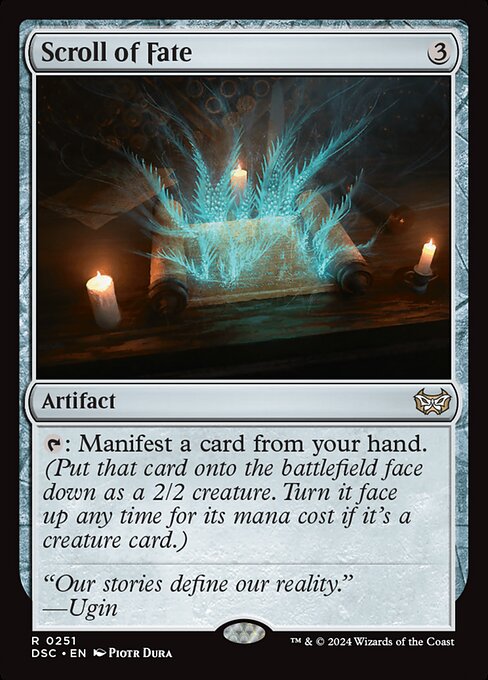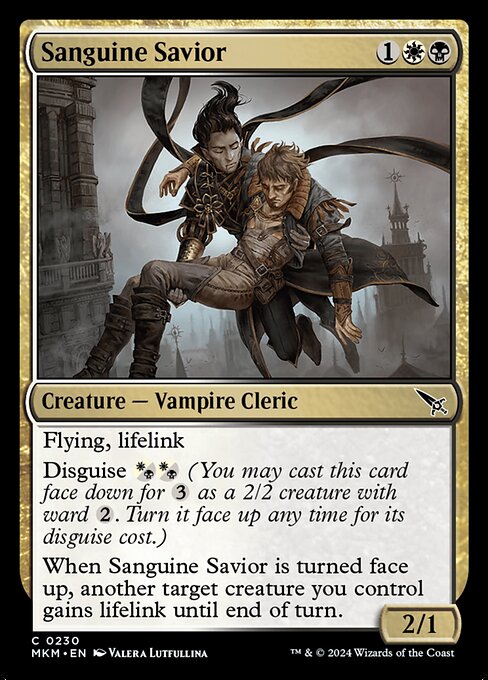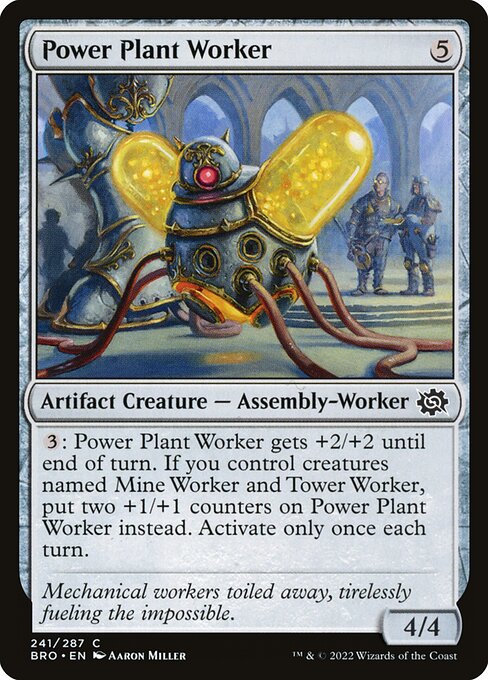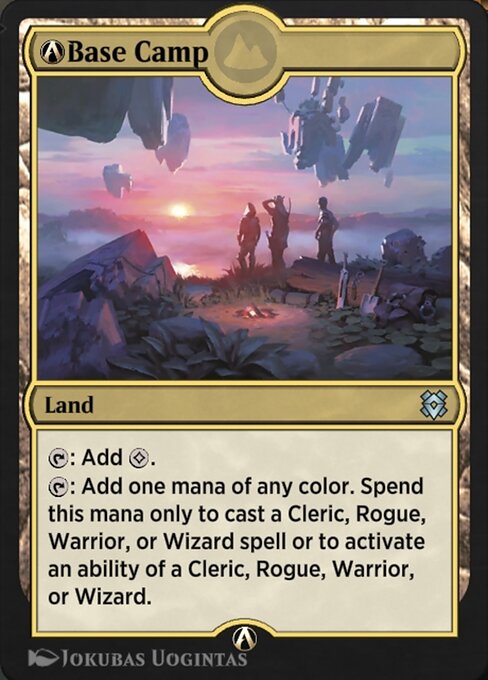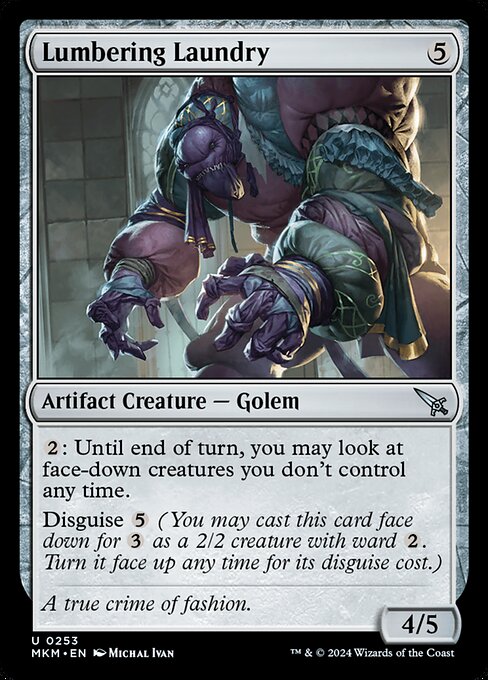
Artifact Creature — Golem
: Until end of turn, you may look at face-down creatures you don't control any time.
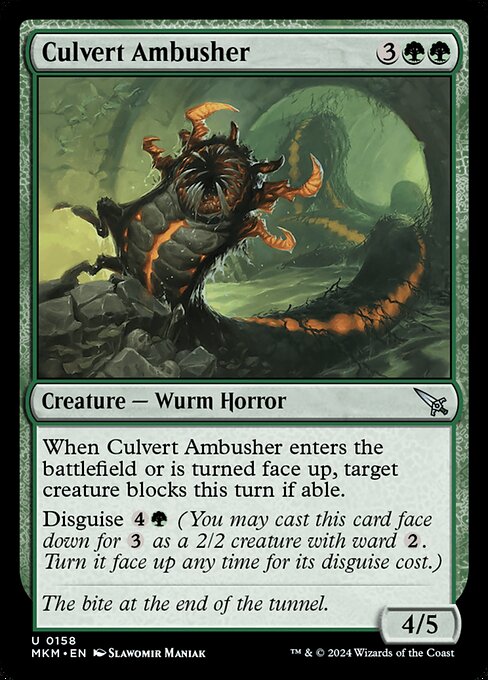
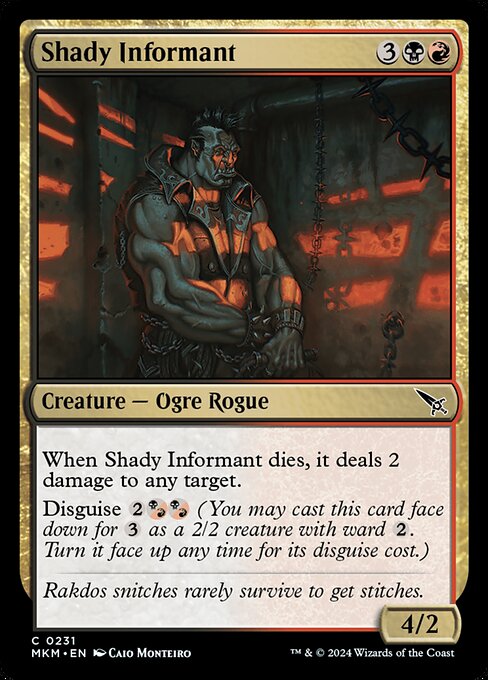
DisguiseDisguise is a static ability that functions in any zone from which you could play the card it’s on, and the disguise effect works any time the card is face down. “Disguise [cost]” means “You may cast this card as a 2/2 face-down creature with ward , no name, no subtypes, and no mana cost by paying rather than paying its mana cost.” (See rule 708, “Face-Down Spells and Permanents.”)
To cast a card using its disguise ability, turn the card face down and announce that you are using a disguise ability. It becomes a 2/2 face-down creature card with ward , no name, no subtypes, and no mana cost. Any effects or prohibitions that would apply to casting a card with these characteristics (and not the face-up card’s characteristics) are applied to casting this card. These values are the copiable values of that object’s characteristics. (See rule 613, “Interaction of Continuous Effects,” and rule 707, “Copying Objects.”) Put it onto the stack (as a face-down spell with the same characteristics), and pay rather than pay its mana cost. This follows the rules for paying alternative costs. You can use a disguise ability to cast a card from any zone from which you could normally cast it. When the spell resolves, it enters the battlefield with the same characteristics the spell had. The disguise effect applies to the face-down object wherever it is, and it ends when the permanent is turned face up.
You can’t normally cast a card face down. A disguise ability allows you to do so.
Any time you have priority, you may turn a face-down permanent you control with a disguise ability face up. This is a special action; it doesn’t use the stack (see rule 116). To do this, show all players what the permanent’s disguise cost would be if it were face up, pay that cost, then turn the permanent face up. (If the permanent wouldn’t have a disguise cost if it were face up, it can’t be turned face up this way.) The disguise effect on it ends, and it regains its normal characteristics. Any abilities relating to the permanent entering the battlefield don’t trigger when it’s turned face up and don’t have any effect, because the permanent has already entered the battlefield.
If a permanent’s disguise cost includes X, other abilities of that permanent may also refer to X. The value of X in those abilities is equal to the value of X chosen as the disguise special action was taken.
See rule 708, “Face-Down Spells and Permanents,” for more information about how to cast cards with a disguise ability. (CR 702.168) (You may castTo cast a spell is to take it from the zone it’s in (usually the hand), put it on the stack, and pay its costs, so that it will eventually resolve and have its effect. A player may cast a spell if they have priority. See rule 601, “Casting Spells.”
To cast a card is to cast it as a spell. (CR 701.5) this card face down for as a 2/2 creature with ward Ward is a triggered ability. Ward [cost] means “Whenever this permanent becomes the target of a spell or ability an opponent controls, counter that spell or ability unless that player pays [cost].”
Some ward abilities include an X in their cost and state what X is equal to. This value is determined at the time the ability resolves, not locked in as the ability triggers. (CR 702.21). Turn it face up any time for its disguiseDisguise is a static ability that functions in any zone from which you could play the card it’s on, and the disguise effect works any time the card is face down. “Disguise [cost]” means “You may cast this card as a 2/2 face-down creature with ward , no name, no subtypes, and no mana cost by paying rather than paying its mana cost.” (See rule 708, “Face-Down Spells and Permanents.”)
To cast a card using its disguise ability, turn the card face down and announce that you are using a disguise ability. It becomes a 2/2 face-down creature card with ward , no name, no subtypes, and no mana cost. Any effects or prohibitions that would apply to casting a card with these characteristics (and not the face-up card’s characteristics) are applied to casting this card. These values are the copiable values of that object’s characteristics. (See rule 613, “Interaction of Continuous Effects,” and rule 707, “Copying Objects.”) Put it onto the stack (as a face-down spell with the same characteristics), and pay rather than pay its mana cost. This follows the rules for paying alternative costs. You can use a disguise ability to cast a card from any zone from which you could normally cast it. When the spell resolves, it enters the battlefield with the same characteristics the spell had. The disguise effect applies to the face-down object wherever it is, and it ends when the permanent is turned face up.
You can’t normally cast a card face down. A disguise ability allows you to do so.
Any time you have priority, you may turn a face-down permanent you control with a disguise ability face up. This is a special action; it doesn’t use the stack (see rule 116). To do this, show all players what the permanent’s disguise cost would be if it were face up, pay that cost, then turn the permanent face up. (If the permanent wouldn’t have a disguise cost if it were face up, it can’t be turned face up this way.) The disguise effect on it ends, and it regains its normal characteristics. Any abilities relating to the permanent entering the battlefield don’t trigger when it’s turned face up and don’t have any effect, because the permanent has already entered the battlefield.
If a permanent’s disguise cost includes X, other abilities of that permanent may also refer to X. The value of X in those abilities is equal to the value of X chosen as the disguise special action was taken.
See rule 708, “Face-Down Spells and Permanents,” for more information about how to cast cards with a disguise ability. (CR 702.168) cost.)
$0.09
Commander: LegalModern: Legal
Save this card
Log in to save cards to your lists.
Start a deck with this cardTags and classifications
Card attributes are distinct from extracted ability facts and inferred themes. AI themes and predicted tags are suggestions, not rules text.
Ability tags
Mana costs
Creature kinds
Keyword tags
Mana value
Timing tags
Type tags
Predicted tags are currently unavailable.