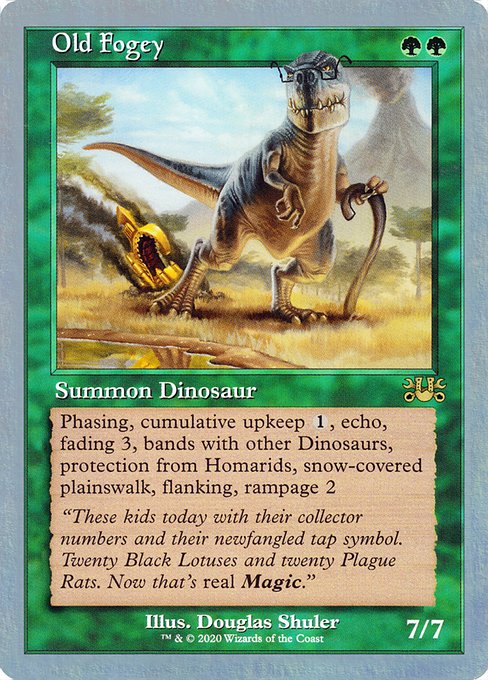
Summon — Dinosaur
PhasingPhasing is a static ability that modifies the rules of the untap step. During each player’s untap step, before the active player untaps permanents, all phased-in permanents with phasing that player controls “phase out.” Simultaneously, all phased-out permanents that had phased out under that player’s control “phase in.”
If a permanent phases out, its status changes to “phased out.” Except for rules and effects that specifically mention phased-out permanents, a phased-out permanent is treated as though it does not exist. It can’t affect or be affected by anything else in the game. A permanent that phases out is removed from combat. (See rule 506.4.)
If a permanent phases in, its status changes to “phased in.” The game once again treats it as though it exists.
The phasing event doesn’t actually cause a permanent to change zones or control, even though it’s treated as though it’s not on the battlefield and not under its controller’s control while it’s phased out. Zone-change triggers don’t trigger when a permanent phases in or out. Tokens continue to exist on the battlefield while phased out. Counters and stickers remain on a permanent while it’s phased out. Effects that check a phased-in permanent’s history won’t treat the phasing event as having caused the permanent to leave or enter the battlefield or its controller’s control.
If a continuous effect generated by the resolution of a spell or ability modifies the characteristics or changes the controller of any objects, a phased-out permanent won’t be included in the set of affected objects. This includes continuous effects that reference the permanent specifically, unless they also specifically refer to the permanent as phased out.
Continuous effects that affect a phased-out permanent may expire while that permanent is phased out. If so, they will no longer affect that permanent once it’s phased in. In particular, effects with “for as long as” durations that track that permanent (see rule 611.2b) end when that permanent phases out because they can no longer see it.
When a permanent phases out, any Auras, Equipment, or Fortifications attached to that permanent phase out at the same time. This alternate way of phasing out is known as phasing out “indirectly.” An Aura, Equipment, or Fortification that phased out indirectly won’t phase in by itself, but instead phases in along with the permanent it’s attached to.
If an object would simultaneously phase out directly and indirectly, it just phases out indirectly.
An Aura, Equipment, or Fortification that phased out directly will phase in attached to the object or player it was attached to when it phased out, if that object is still in the same zone or that player is still in the game. If not, that Aura, Equipment, or Fortification phases in unattached. State-based actions apply as appropriate. (See rules 704.5m and 704.5n.)
Abilities that trigger when a permanent becomes attached or unattached from an object or player don’t trigger when that permanent phases in or out.
Phased-out permanents owned by a player who leaves the game also leave the game. This doesn’t cause zone-change abilities to trigger. See rule 800.4.
If an effect causes a player to skip their untap step, the phasing event simply doesn’t occur that turn.
In a multiplayer game, game rules may cause a phased-out permanent to leave the game or to be exiled once a player leaves the game. (See rules 800.4a and 800.4c.) If a phased-out permanent phased out under the control of a player who has left the game, that permanent phases in during the next untap step after that player’s next turn would have begun.
Multiple instances of phasing on the same permanent are redundant. (CR 702.26), cumulative upkeepCumulative upkeep is a triggered ability that imposes an increasing cost on a permanent. “Cumulative upkeep [cost]” means “At the beginning of your upkeep, if this permanent is on the battlefield, put an age counter on this permanent. Then you may pay [cost] for each age counter on it. If you don’t, sacrifice it.” If [cost] has choices associated with it, each choice is made separately for each age counter, then either the entire set of costs is paid, or none of them is paid. Partial payments aren’t allowed.
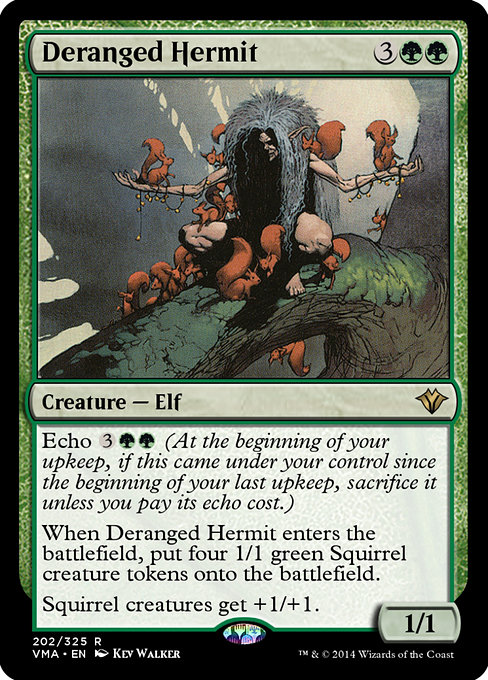
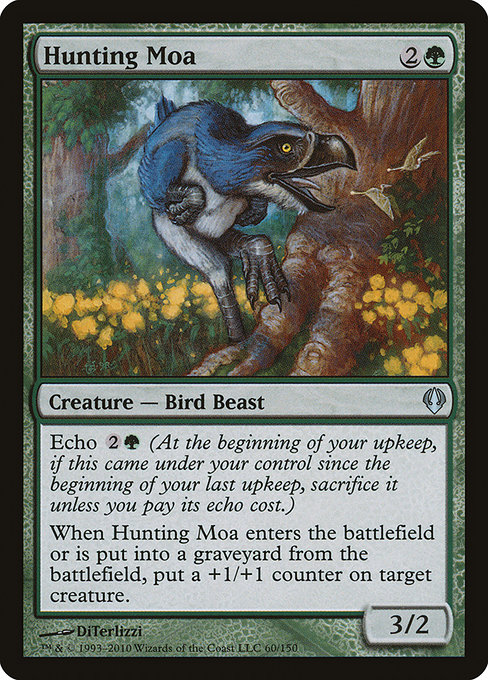
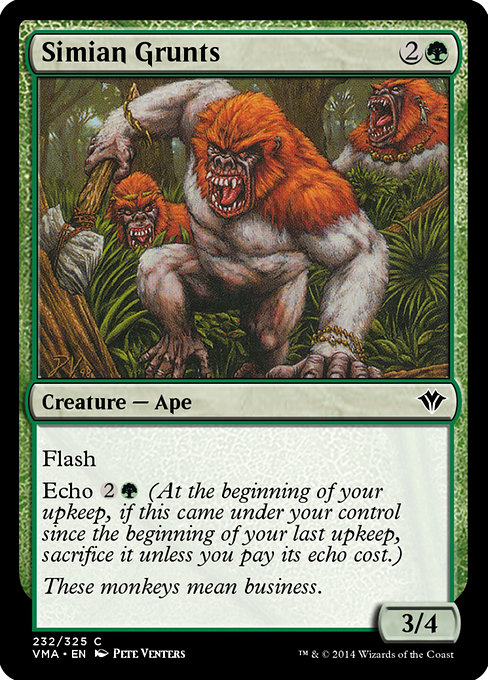
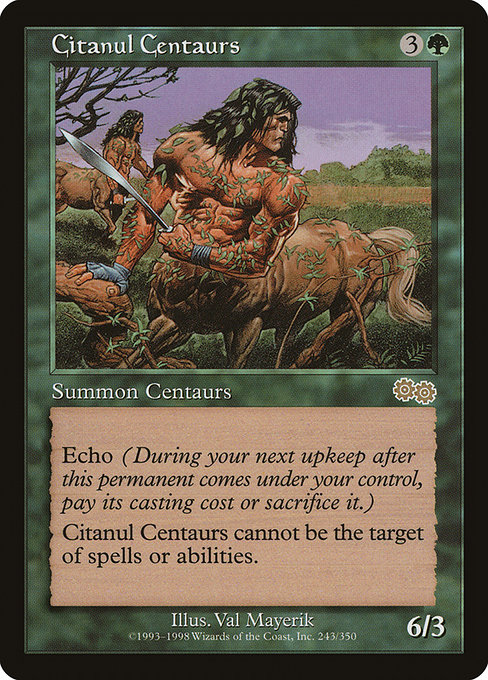
If a permanent has multiple instances of cumulative upkeep, each triggers separately. However, the age counters are not connected to any particular ability; each cumulative upkeep ability will count the total number of age counters on the permanent at the time that ability resolves. (CR 702.24) , echoEcho is a triggered ability. “Echo [cost]” means “At the beginning of your upkeep, if this permanent came under your control since the beginning of your last upkeep, sacrifice it unless you pay [cost].”
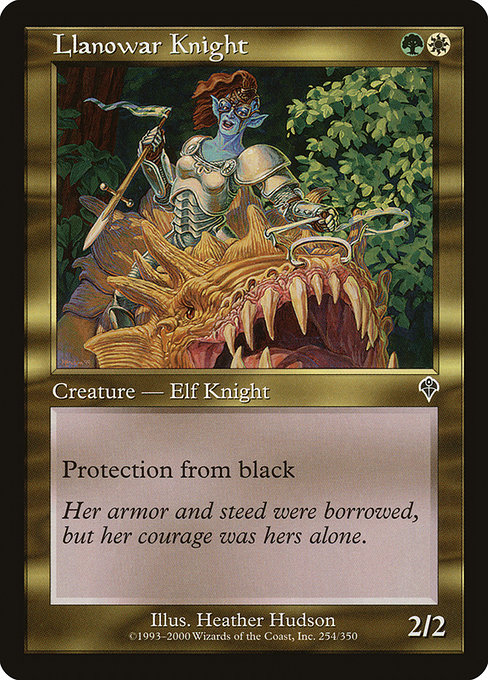
Urza block cards with the echo ability were printed without an echo cost. These cards have been given errata in the Oracle card reference; each one now has an echo cost equal to its mana cost. (CR 702.30) , fadingFading is a keyword that represents two abilities. “Fading N” means “This permanent enters with N fade counters on it” and “At the beginning of your upkeep, remove a fade counter from this permanent. If you can’t, sacrifice the permanent.” (CR 702.32) 3, bands with other Dinosaurs, protectionProtection is a static ability, written “Protection from [quality].” This quality is usually a color (as in “protection from black”) but can be any characteristic value or information. If the quality happens to be a card name, it is treated as such only if the protection ability specifies that the quality is a name. If the quality is a card type, subtype, or supertype, the ability applies to sources that are permanents with that card type, subtype, or supertype and to any sources not on the battlefield that are of that card type, subtype, or supertype. This is an exception to rule 109.2.
A permanent or player with protection can’t be targeted by spells with the stated quality and can’t be targeted by abilities from a source with the stated quality.
A permanent or player with protection can’t be enchanted by Auras that have the stated quality. Such Auras attached to the permanent or player with protection will be put into their owners’ graveyards as a state-based action. (See rule 704, “State-Based Actions.”)
A permanent with protection can’t be equipped by Equipment that have the stated quality or fortified by Fortifications that have the stated quality. Such Equipment or Fortifications become unattached from that permanent as a state-based action, but remain on the battlefield. (See rule 704, “State-Based Actions.”)
Any damage that would be dealt by sources that have the stated quality to a permanent or player with protection is prevented.
Attacking creatures with protection can’t be blocked by creatures that have the stated quality.
“Protection from [quality A] and from [quality B]” is shorthand for “protection from [quality A]” and “protection from [quality B]”; it behaves as two separate protection abilities.
“Protection from each [characteristic]” is shorthand for “protection from [quality A],” “protection from [quality B],” and so on for each possible quality the listed characteristic could have; it behaves as multiple separate protection abilities.
“Protection from each [set of characteristics, qualities, or players]” is shorthand for “protection from [A],” “protection from [B],” and so on for each characteristic, quality, or player in the set. It behaves as multiple separate protection abilities.
“Protection from everything” is a variant of the protection ability. A permanent or player with protection from everything has protection from each object regardless of that object’s characteristic values. Such a permanent or player can’t be targeted by spells or abilities and can’t be enchanted by Auras. Such a permanent can’t be equipped by Equipment, fortified by Fortifications, or blocked by creatures. All damage that would be dealt to such a permanent or player is prevented.
“Protection from [a player]” is a variant of the protection ability. A permanent or player with protection from a specific player has protection from each object that player controls and protection from each object that player owns not controlled by another player, regardless of that object’s characteristic values. Such a permanent or player can’t be targeted by spells or abilities the specified player controls and can’t be enchanted by Auras that player controls. Such a permanent can’t be equipped by Equipment that player controls, fortified by Fortifications that player controls, or blocked by creatures that player controls. All damage that would be dealt to such a permanent or player by sources controlled by the specified player or owned by that player but not controlled by another player is prevented.
Multiple instances of protection from the same quality on the same permanent or player are redundant.
Some Auras both give the enchanted creature protection from a quality and say “this effect doesn’t remove” either that specific Aura or all Auras. This means that the specified Auras aren’t put into their owners’ graveyards as a state-based action. If the creature has other instances of protection from the same quality, those instances affect Auras as normal.
One Aura (Benevolent Blessing) gives the enchanted creature protection from a quality and says the effect doesn’t remove certain permanents that are “already attached to” that creature. This means that, when the protection effect starts to apply, any objects with the stated quality that are already attached to that creature (including the Aura giving that creature protection) will not be put into their owners’ graveyards as a state-based action. Other permanents with the stated quality can’t become attached to the creature. If the creature has other instances of protection from the same quality, those instances affect attached permanents as normal. (CR 702.16) from Homarids, snow-covered plainswalkLandwalk is a generic term that appears within an object’s rules text as “[type]walk,” where [type] is usually a land type, but it can also be the card type land plus any combination of land types, card types, and/or supertypes.
Landwalk is an evasion ability.
A creature with landwalk can’t be blocked as long as the defending player controls at least one land with the specified land type (as in “islandwalk”), with the specified type or supertype (as in “artifact landwalk”), without the specified type or supertype (as in “nonbasic landwalk”), or with both the specified type or supertype and the specified subtype (as in “snow swampwalk”). (See rule 509, “Declare Blockers Step.”)
Landwalk abilities don’t “cancel” one another.
Multiple instances of the same kind of landwalk on the same creature are redundant. (CR 702.14), flankingFlanking is a triggered ability that triggers during the declare blockers step. (See rule 509, “Declare Blockers Step.”) “Flanking” means “Whenever this creature becomes blocked by a creature without flanking, the blocking creature gets -1/-1 until end of turn.”
If a creature has multiple instances of flanking, each triggers separately. (CR 702.25), rampageRampage is a triggered ability. “Rampage N” means “Whenever this creature becomes blocked, it gets +N/+N until end of turn for each creature blocking it beyond the first.” (See rule 509, “Declare Blockers Step.”)
The rampage bonus is calculated only once per combat, when the triggered ability resolves. Adding or removing blockers later in combat won’t change the bonus.
If a creature has multiple instances of rampage, each triggers separately. (CR 702.23) 2
$0.29
Commander: Not legalModern: Not legal
Save this card
Log in to save cards to your lists.
Start a deck with this cardTags and classifications
Card attributes are distinct from extracted ability facts and inferred themes. AI themes and predicted tags are suggestions, not rules text.
Ability tags
Mana costs
Color identity
Keyword tags
Mana value
Timing tags
Type tags
Predicted tags are currently unavailable.