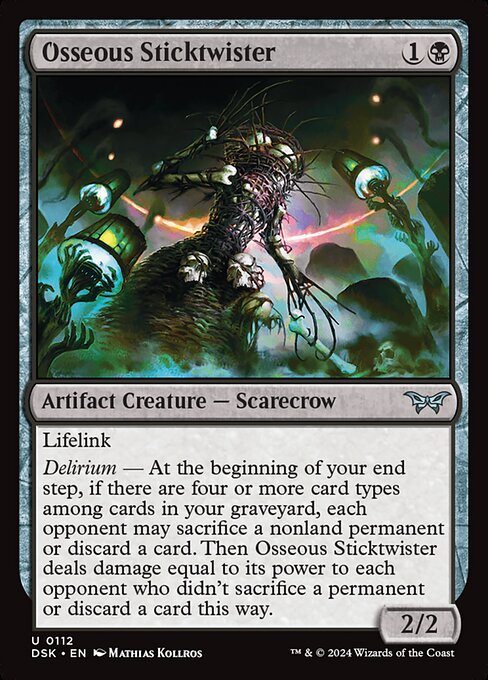
Artifact Creature — Scarecrow
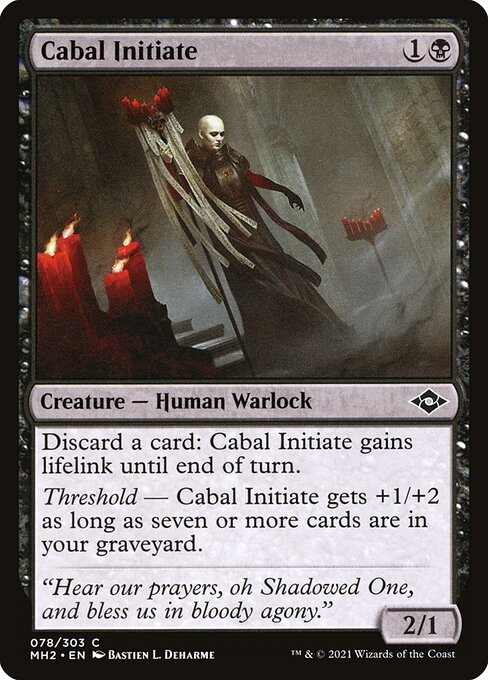
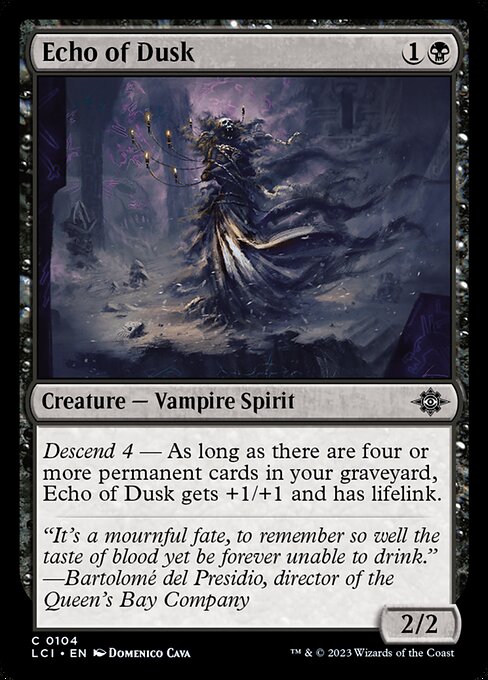
LifelinkLifelink is a static ability.
Damage dealt by a source with lifelink causes that source’s controller, or its owner if it has no controller, to gain that much life (in addition to any other results that damage causes). See rule 120.3.
If an object is no longer in the zone it’s expected to be in as an effect causes it to deal damage, its last known information is used to determine whether it had lifelink.
The lifelink rules function no matter what zone an object with lifelink deals damage from.
If multiple sources with lifelink deal damage at the same time, they cause separate life gain events (see rules 119.9–10).
Multiple instances of lifelink on the same object are redundant. (CR 702.15)
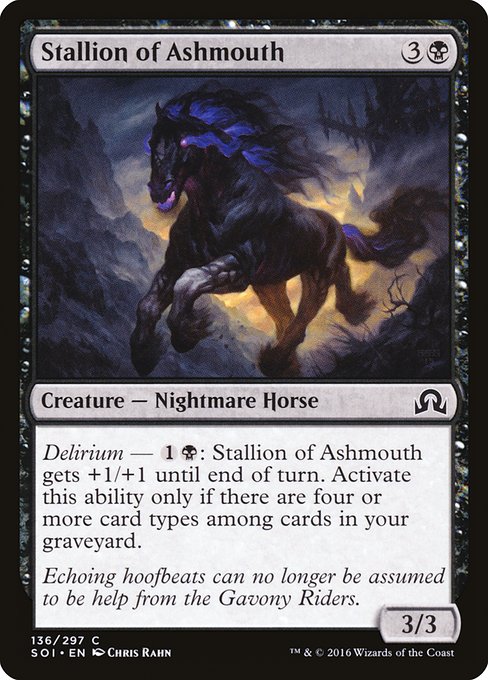
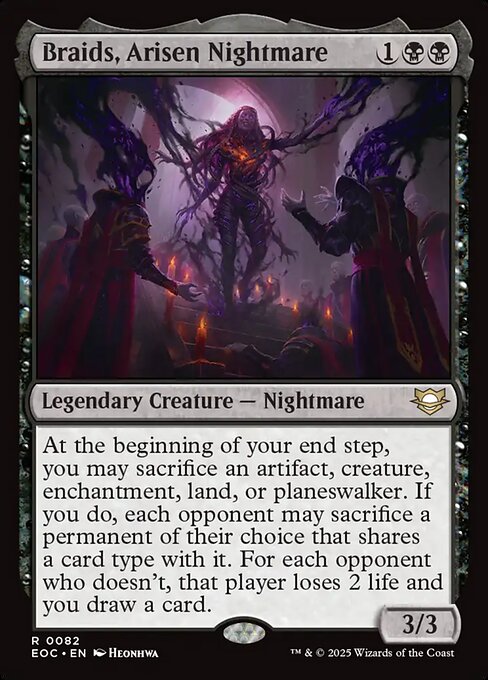
DeliriumAn ability word has no rules meaning of its own. It groups abilities with similar themes; the text following it explains this card’s effect. (CR 207.2c) — At the beginning of your end step, if there are four or more card types among cards in your graveyard, each opponent may sacrificeTo sacrifice a permanent, its controller moves it from the battlefield directly to its owner’s graveyard. A player can’t sacrifice something that isn’t a permanent, or something that’s a permanent they don’t control. Sacrificing a permanent doesn’t destroy it, so regeneration or other effects that replace destruction can’t affect this action. (CR 701.21) a nonland permanent of their choice or discardTo discard a card, move it from its owner’s hand to that player’s graveyard.
By default, effects that cause a player to discard a card allow the affected player to choose which card to discard. Some effects, however, require a random discard or allow another player to choose which card is discarded.
If a card is discarded, but an effect causes it to be put into a hidden zone instead of into its owner’s graveyard without being revealed, all values of that card’s characteristics are considered to be undefined. If a card is discarded this way to pay a cost that specifies a characteristic about the discarded card, that cost payment is illegal; the game returns to the moment before the cost was paid (see rule 733, “Handling Illegal Actions”). (CR 701.9) a card. Then this creature deals damage equal to its power to each opponent who didn't sacrificeTo sacrifice a permanent, its controller moves it from the battlefield directly to its owner’s graveyard. A player can’t sacrifice something that isn’t a permanent, or something that’s a permanent they don’t control. Sacrificing a permanent doesn’t destroy it, so regeneration or other effects that replace destruction can’t affect this action. (CR 701.21) a permanent or discardTo discard a card, move it from its owner’s hand to that player’s graveyard.
By default, effects that cause a player to discard a card allow the affected player to choose which card to discard. Some effects, however, require a random discard or allow another player to choose which card is discarded.
If a card is discarded, but an effect causes it to be put into a hidden zone instead of into its owner’s graveyard without being revealed, all values of that card’s characteristics are considered to be undefined. If a card is discarded this way to pay a cost that specifies a characteristic about the discarded card, that cost payment is illegal; the game returns to the moment before the cost was paid (see rule 733, “Handling Illegal Actions”). (CR 701.9) a card this way.
$0.30
Commander: LegalModern: Legal
Save this card
Log in to save cards to your lists.
Start a deck with this cardTags and classifications
Card attributes are distinct from extracted ability facts and inferred themes. AI themes and predicted tags are suggestions, not rules text.
Ability tags
Mana costs
Creature kinds
Color identity
Keyword tags
Mana value
Theme tags
Timing tags
Type tags
Predicted tags are currently unavailable.