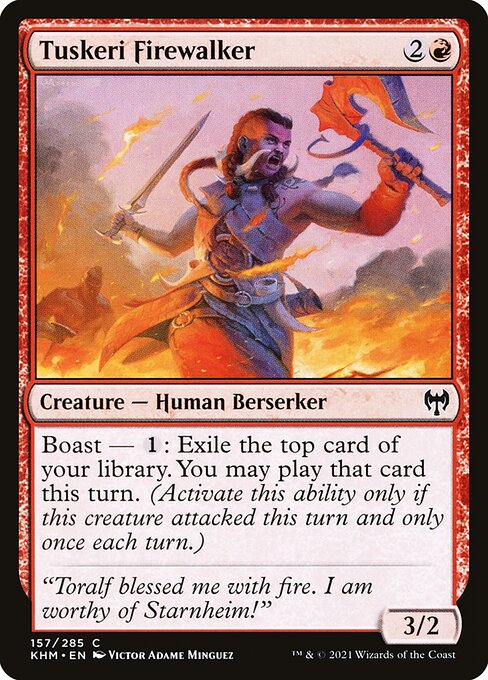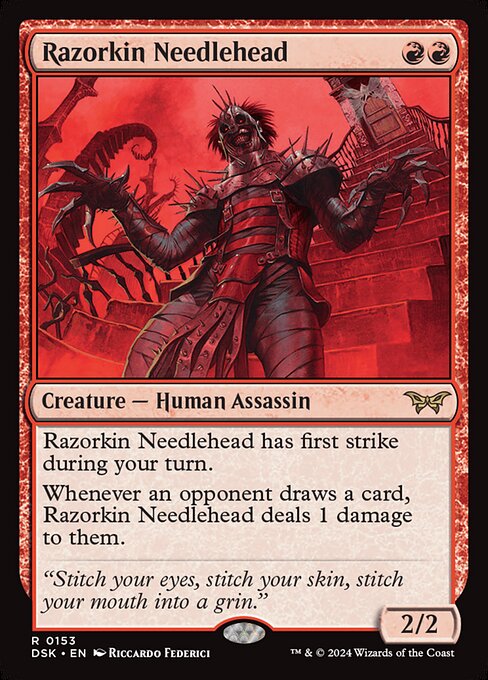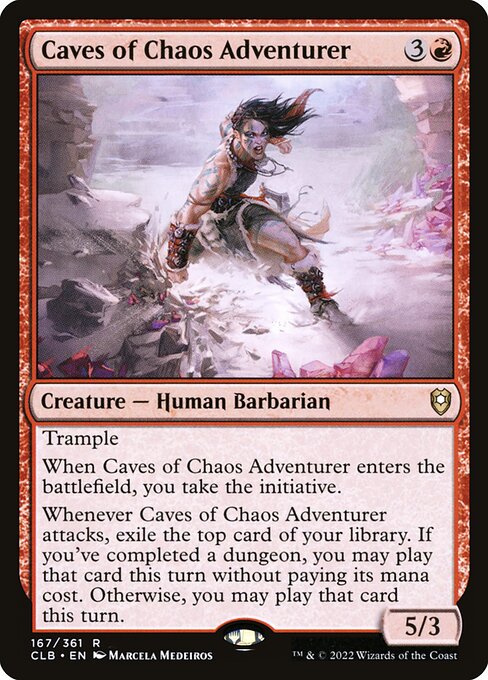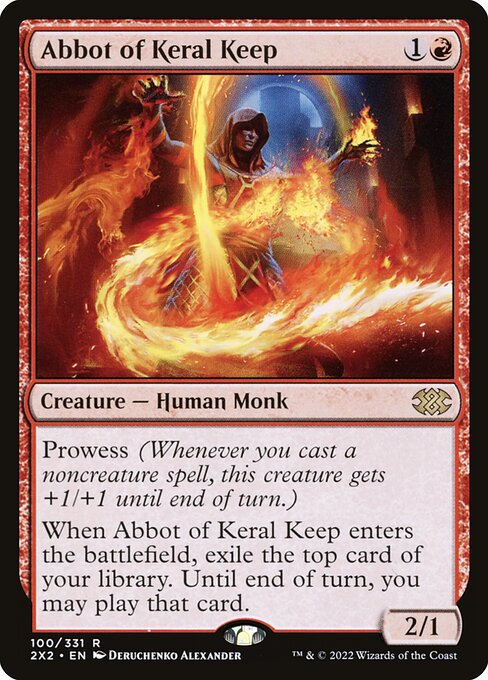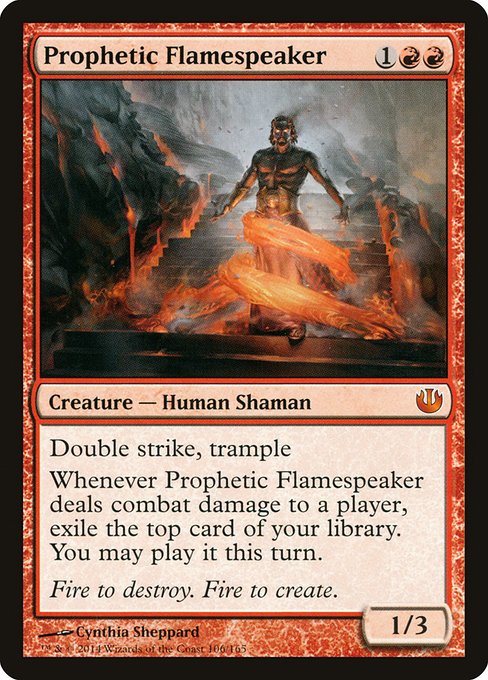
Creature — Human Shaman
Double strikeDouble strike is a static ability that modifies the rules for the combat damage step. (See rule 510, “Combat Damage Step.”)
If at least one attacking or blocking creature has first strike (see rule 702.7) or double strike as the combat damage step begins, the only creatures that assign combat damage in that step are those with first strike or double strike. After that step, instead of proceeding to the end of combat step, the phase gets a second combat damage step. The only creatures that assign combat damage in that step are the remaining attackers and blockers that had neither first strike nor double strike as the first combat damage step began, as well as the remaining attackers and blockers that currently have double strike. After that step, the phase proceeds to the end of combat step.
Removing double strike from a creature during the first combat damage step will stop it from assigning combat damage in the second combat damage step.
Giving double strike to a creature with first strike after it has already dealt combat damage in the first combat damage step will allow the creature to assign combat damage in the second combat damage step.
Multiple instances of double strike on the same creature are redundant. (CR 702.4), trampleTrample is a static ability that modifies the rules for assigning an attacking creature’s combat damage. The ability has no effect when a creature with trample is blocking or is dealing noncombat damage. (See rule 510, “Combat Damage Step.”)
The controller of an attacking creature with trample first assigns damage to the creature(s) blocking it. Once all those blocking creatures are assigned lethal damage, any excess damage is assigned as its controller chooses among those blocking creatures and the player, planeswalker, or battle the creature is attacking. When checking for assigned lethal damage, take into account damage already marked on the creature and damage from other creatures that’s being assigned during the same combat damage step, but not any abilities or effects that might change the amount of damage that’s actually dealt. The attacking creature’s controller need not assign lethal damage to all those blocking creatures but in that case can’t assign any damage to the player or planeswalker it’s attacking.
Trample over planeswalkers is a variant of trample that modifies the rules for assigning combat damage to planeswalkers. The controller of a creature with trample over planeswalkers assigns that creature’s combat damage as described in rule 702.19b, with one exception. If that creature is attacking a planeswalker, after lethal damage is assigned to all blocking creatures and damage at least equal to the loyalty of the planeswalker the creature is attacking is assigned to that planeswalker, further excess damage may be assigned as the attacking creature’s controller chooses among those blocking creatures, that planeswalker, and that planeswalker’s controller. When checking for assigned damage equal to a planeswalker’s loyalty, take into account damage from other creatures that’s being assigned during the same combat damage step, but not any abilities or effects that might change the amount of damage that’s actually dealt.
If an attacking creature with trample or trample over planeswalkers is blocked, but there are no creatures blocking it when damage is assigned, its damage is assigned to the defending player and/or planeswalker as though all blocking creatures have been assigned lethal damage.
If a creature with trample over planeswalkers is attacking a planeswalker and that planeswalker is removed from combat, the creature’s damage may be assigned to the defending player once all blocking creatures have been dealt lethal damage or, if there are no blocking creatures when damage is assigned, all its damage is assigned to the defending player. This is an exception to rule 506.4c, and it does not cause the creature to be attacking that player.
If a creature without trample over planeswalkers is attacking a planeswalker, none of its combat damage can be assigned to the defending player, even if that planeswalker has been removed from combat or the damage the attacking creature could assign is greater than the planeswalker’s loyalty.
Multiple instances of trample on the same creature are redundant. Multiple instances of trample over planeswalkers on the same creature are redundant. (CR 702.19)
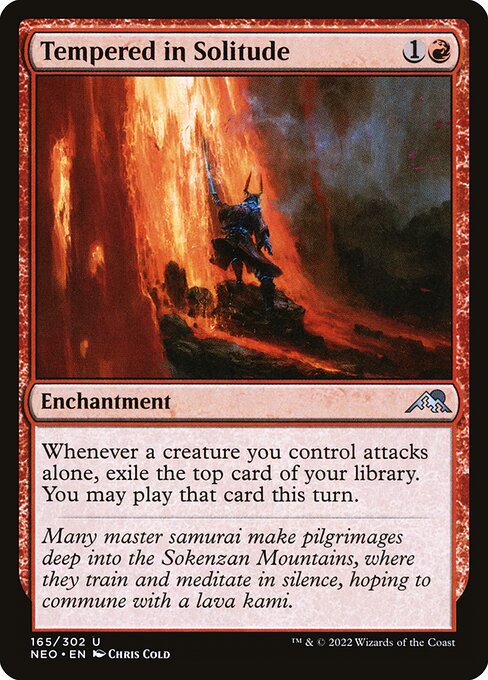
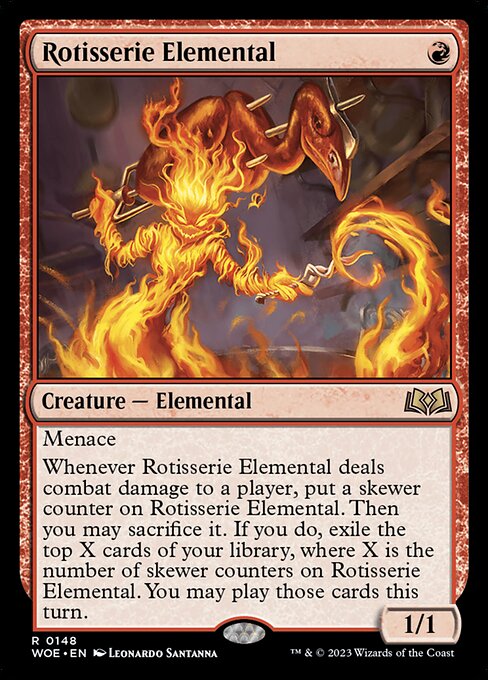
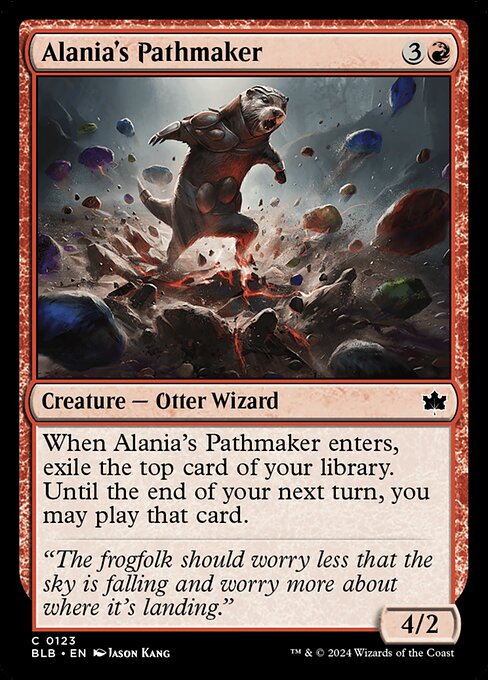
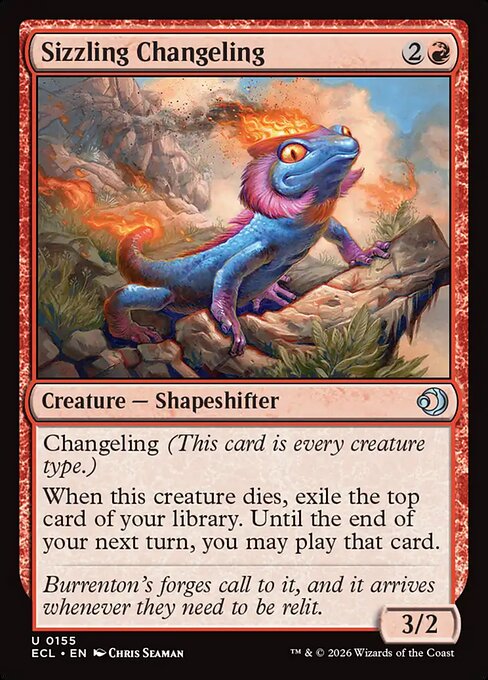
Whenever this creature deals combat damage to a player, exileTo exile an object, move it to the exile zone from wherever it is. See rule 406, “Exile.” (CR 701.13) the top card of your library. You may playTo play a land means to put it onto the battlefield from the zone it’s in (usually the hand). A player may play a land if they have priority, it’s the main phase of their turn, the stack is empty, and they haven’t played a land this turn. Playing a land is a special action (see rule 116), so it doesn’t use the stack; it simply happens. Putting a land onto the battlefield as the result of a spell or ability isn’t the same as playing a land. See rule 305, “Lands.”
To play a card means to play that card as a land or to cast that card as a spell, whichever is appropriate.
Some effects instruct a player to “play” with a certain aspect of the game changed, such as “Play with the top card of your library revealed.” “Play” in this sense means to play the Magic game.
Previously, the action of casting a spell, or casting a card as a spell, was referred to on cards as “playing” that spell or that card. Cards that were printed with that text have received errata in the Oracle card reference so they now refer to “casting” that spell or that card.
Previously, the action of using an activated ability was referred to on cards as “playing” that ability. Cards that were printed with that text have received errata in the Oracle card reference so they now refer to “activating” that ability. (CR 701.18) it this turn.
$0.40
Commander: LegalModern: Legal
Save this card
Log in to save cards to your lists.
Start a deck with this cardTags and classifications
Card attributes are distinct from extracted ability facts and inferred themes. AI themes and predicted tags are suggestions, not rules text.
Ability tags
Mana costs
Creature kinds
Classes and roles
Color identity
Keyword tags
Mana value
Timing tags
Type tags
Predicted tags are currently unavailable.