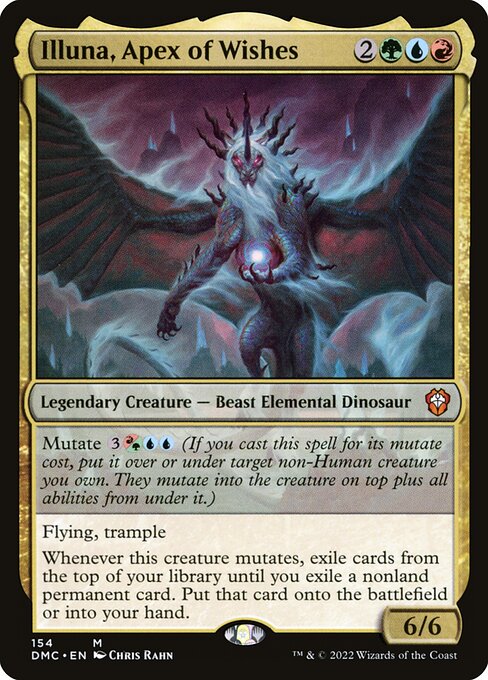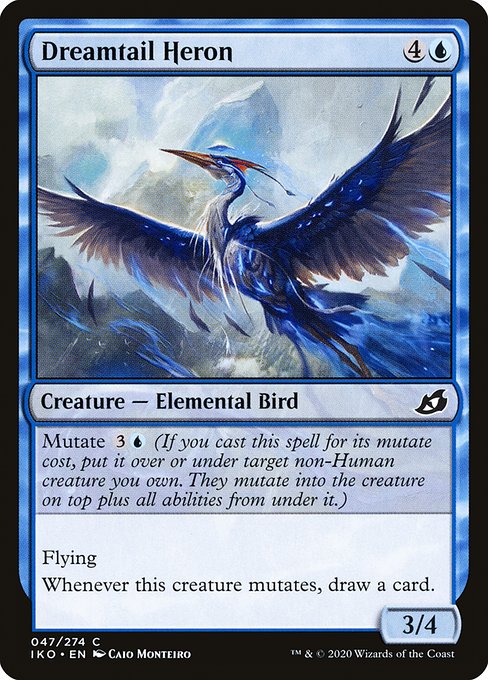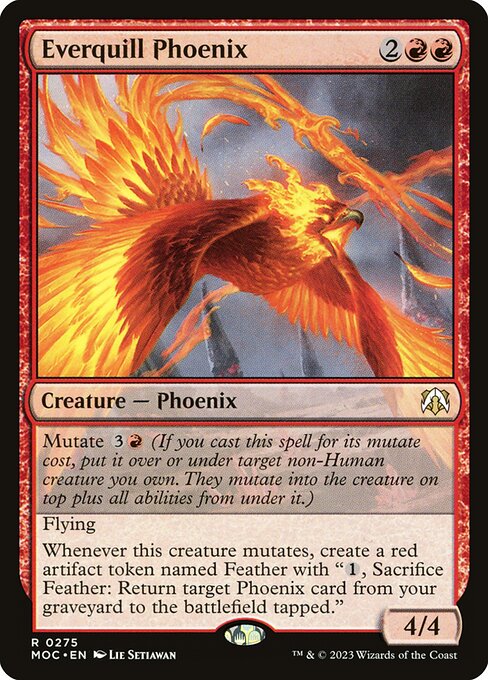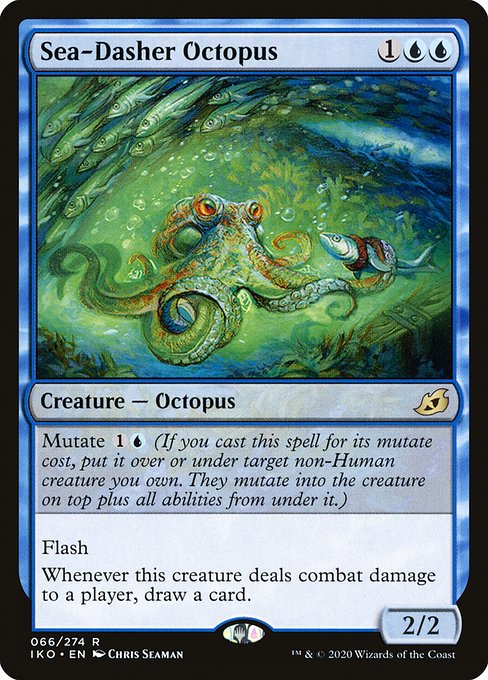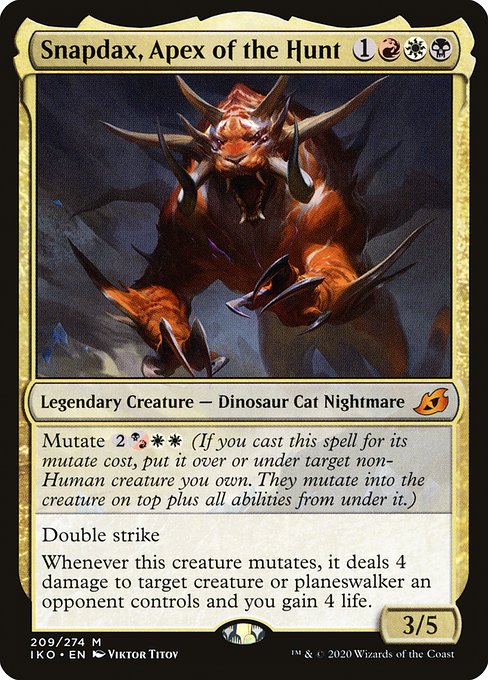
Legendary Creature — Dinosaur Cat Nightmare
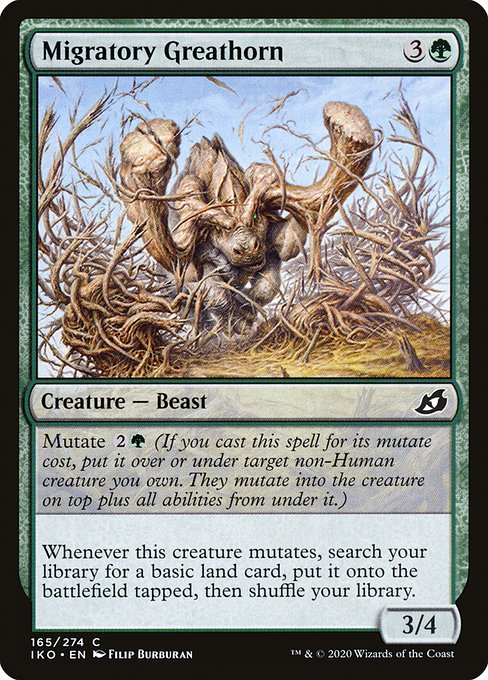
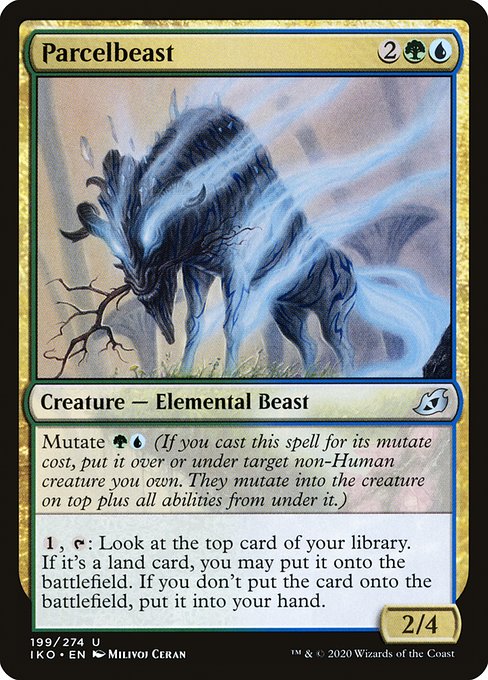
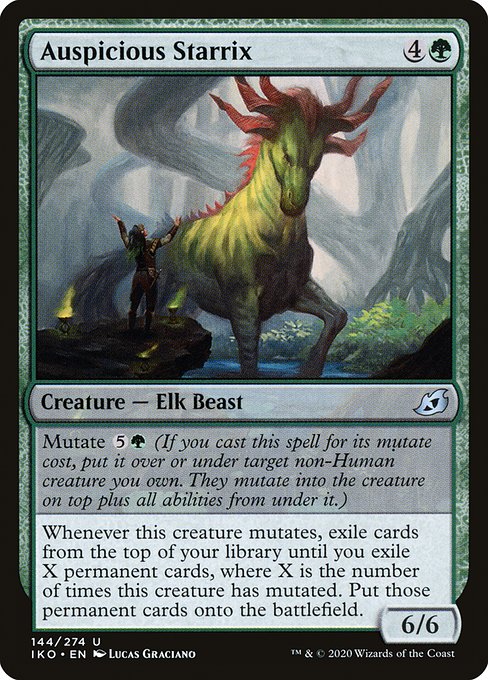
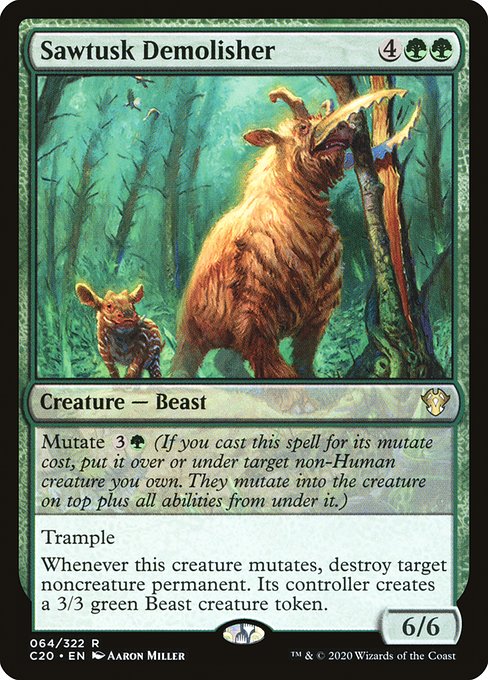
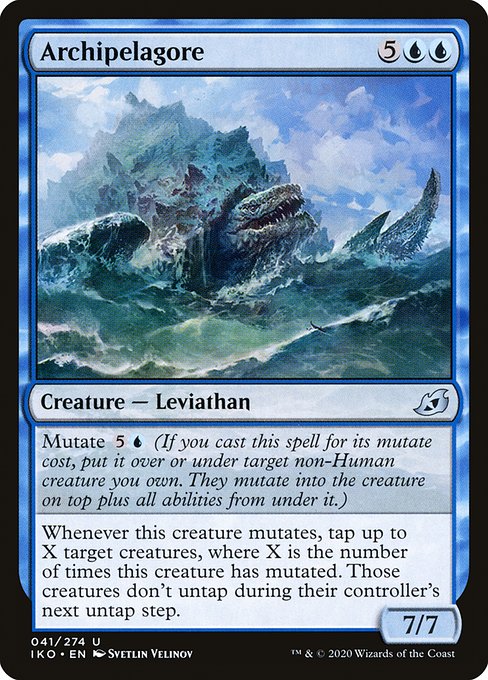
MutateMutate appears on some creature cards. It represents a static ability that functions while the spell with mutate is on the stack. “Mutate [cost]” means “You may pay [cost] rather than pay this spell’s mana cost. If you do, it becomes a mutating creature spell and targets a non-Human creature with the same owner as this spell.” Casting a spell using its mutate ability follows the rules for paying alternative costs (see 601.2b and 601.2f–h).
As a mutating creature spell begins resolving, if its target is illegal, it ceases to be a mutating creature spell and continues resolving as a creature spell and will be put onto the battlefield under the control of the spell’s controller.
As a mutating creature spell resolves, if its target is legal, it doesn’t enter the battlefield. Rather, it merges with the target creature and becomes one object represented by more than one card or token (see rule 730, “Merging with Permanents”). The spell’s controller chooses whether the spell is put on top of the creature or on the bottom. The resulting permanent is a mutated permanent.
An ability that triggers whenever a creature mutates triggers when a spell merges with a creature as a result of a resolving mutating creature spell.
A mutated permanent has all abilities of each card and token that represents it. Its other characteristics are derived from the topmost card or token.
Any effect that refers to or modifies the mutating creature spell refers to or modifies the mutated permanent it merges with as it resolves. (CR 702.140) (If you castTo cast a spell is to take it from the zone it’s in (usually the hand), put it on the stack, and pay its costs, so that it will eventually resolve and have its effect. A player may cast a spell if they have priority. See rule 601, “Casting Spells.”
To cast a card is to cast it as a spell. (CR 701.5) this spell for its mutateMutate appears on some creature cards. It represents a static ability that functions while the spell with mutate is on the stack. “Mutate [cost]” means “You may pay [cost] rather than pay this spell’s mana cost. If you do, it becomes a mutating creature spell and targets a non-Human creature with the same owner as this spell.” Casting a spell using its mutate ability follows the rules for paying alternative costs (see 601.2b and 601.2f–h).
As a mutating creature spell begins resolving, if its target is illegal, it ceases to be a mutating creature spell and continues resolving as a creature spell and will be put onto the battlefield under the control of the spell’s controller.
As a mutating creature spell resolves, if its target is legal, it doesn’t enter the battlefield. Rather, it merges with the target creature and becomes one object represented by more than one card or token (see rule 730, “Merging with Permanents”). The spell’s controller chooses whether the spell is put on top of the creature or on the bottom. The resulting permanent is a mutated permanent.
An ability that triggers whenever a creature mutates triggers when a spell merges with a creature as a result of a resolving mutating creature spell.
A mutated permanent has all abilities of each card and token that represents it. Its other characteristics are derived from the topmost card or token.
Any effect that refers to or modifies the mutating creature spell refers to or modifies the mutated permanent it merges with as it resolves. (CR 702.140) cost, put it over or under target non-Human creature you own. They mutateMutate appears on some creature cards. It represents a static ability that functions while the spell with mutate is on the stack. “Mutate [cost]” means “You may pay [cost] rather than pay this spell’s mana cost. If you do, it becomes a mutating creature spell and targets a non-Human creature with the same owner as this spell.” Casting a spell using its mutate ability follows the rules for paying alternative costs (see 601.2b and 601.2f–h).
As a mutating creature spell begins resolving, if its target is illegal, it ceases to be a mutating creature spell and continues resolving as a creature spell and will be put onto the battlefield under the control of the spell’s controller.
As a mutating creature spell resolves, if its target is legal, it doesn’t enter the battlefield. Rather, it merges with the target creature and becomes one object represented by more than one card or token (see rule 730, “Merging with Permanents”). The spell’s controller chooses whether the spell is put on top of the creature or on the bottom. The resulting permanent is a mutated permanent.
An ability that triggers whenever a creature mutates triggers when a spell merges with a creature as a result of a resolving mutating creature spell.
A mutated permanent has all abilities of each card and token that represents it. Its other characteristics are derived from the topmost card or token.
Any effect that refers to or modifies the mutating creature spell refers to or modifies the mutated permanent it merges with as it resolves. (CR 702.140) into the creature on top plus all abilities from under it.)
Double strikeDouble strike is a static ability that modifies the rules for the combat damage step. (See rule 510, “Combat Damage Step.”)
If at least one attacking or blocking creature has first strike (see rule 702.7) or double strike as the combat damage step begins, the only creatures that assign combat damage in that step are those with first strike or double strike. After that step, instead of proceeding to the end of combat step, the phase gets a second combat damage step. The only creatures that assign combat damage in that step are the remaining attackers and blockers that had neither first strike nor double strike as the first combat damage step began, as well as the remaining attackers and blockers that currently have double strike. After that step, the phase proceeds to the end of combat step.
Removing double strike from a creature during the first combat damage step will stop it from assigning combat damage in the second combat damage step.
Giving double strike to a creature with first strike after it has already dealt combat damage in the first combat damage step will allow the creature to assign combat damage in the second combat damage step.
Multiple instances of double strike on the same creature are redundant. (CR 702.4)
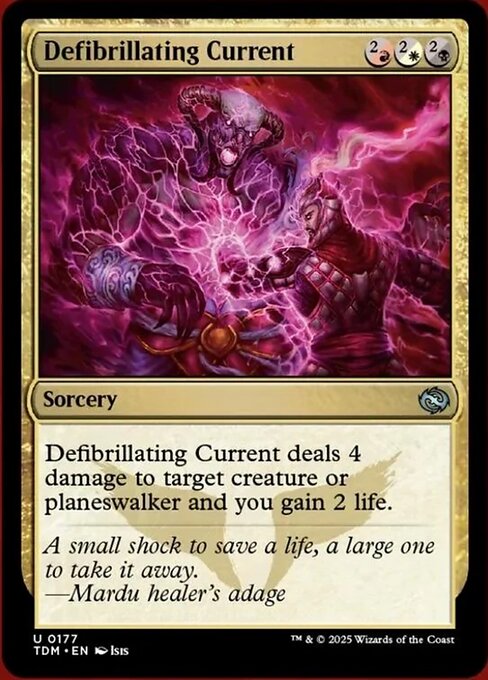
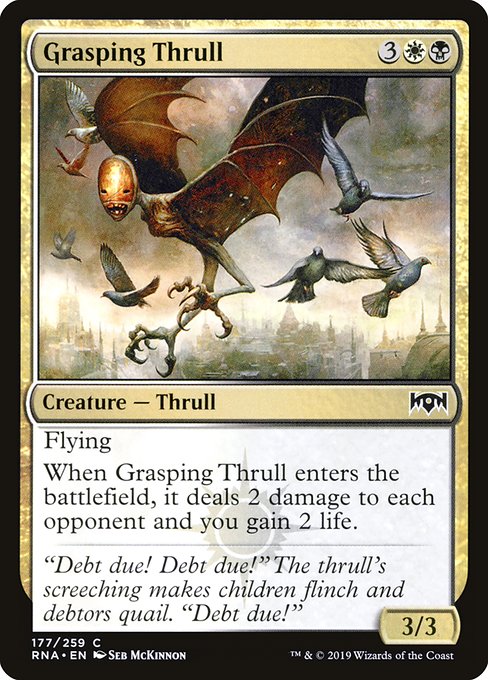
Whenever this creature mutates, it deals 4 damage to target creature or planeswalker an opponent controls and you gain 4 life.
$0.43
Commander: LegalModern: Legal
Save this card
Log in to save cards to your lists.
Start a deck with this cardTags and classifications
Card attributes are distinct from extracted ability facts and inferred themes. AI themes and predicted tags are suggestions, not rules text.
Ability tags
Mana costs
Creature kinds
Color identity
Keyword tags
Mana value
Theme tags
Timing tags
Type tags
Predicted tags are currently unavailable.