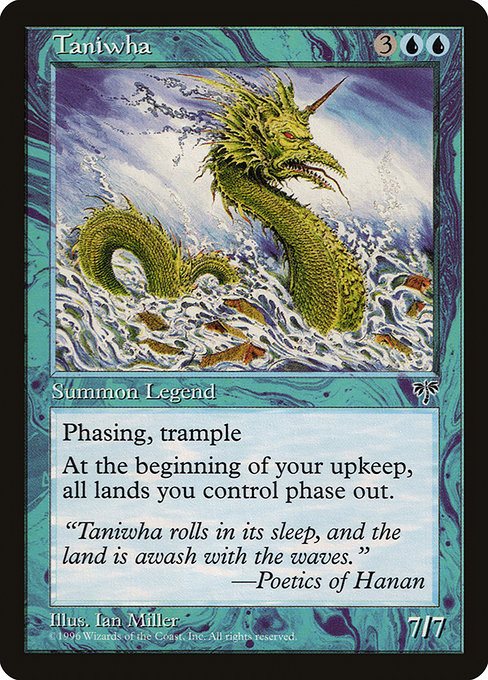
Legendary Creature — Serpent
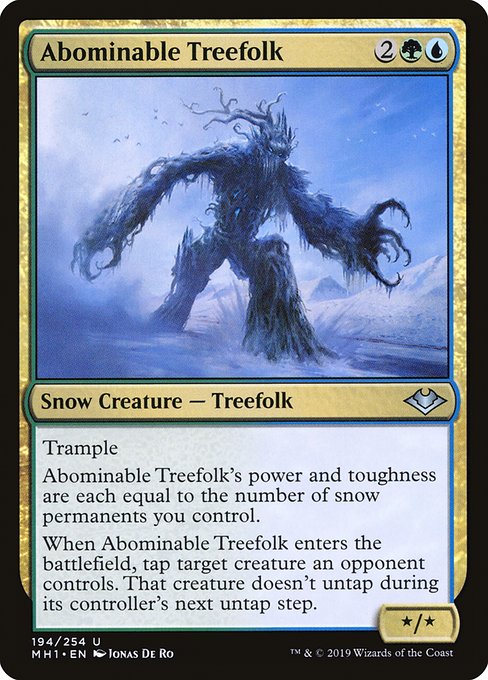
TrampleTrample is a static ability that modifies the rules for assigning an attacking creature’s combat damage. The ability has no effect when a creature with trample is blocking or is dealing noncombat damage. (See rule 510, “Combat Damage Step.”)
The controller of an attacking creature with trample first assigns damage to the creature(s) blocking it. Once all those blocking creatures are assigned lethal damage, any excess damage is assigned as its controller chooses among those blocking creatures and the player, planeswalker, or battle the creature is attacking. When checking for assigned lethal damage, take into account damage already marked on the creature and damage from other creatures that’s being assigned during the same combat damage step, but not any abilities or effects that might change the amount of damage that’s actually dealt. The attacking creature’s controller need not assign lethal damage to all those blocking creatures but in that case can’t assign any damage to the player or planeswalker it’s attacking.
Trample over planeswalkers is a variant of trample that modifies the rules for assigning combat damage to planeswalkers. The controller of a creature with trample over planeswalkers assigns that creature’s combat damage as described in rule 702.19b, with one exception. If that creature is attacking a planeswalker, after lethal damage is assigned to all blocking creatures and damage at least equal to the loyalty of the planeswalker the creature is attacking is assigned to that planeswalker, further excess damage may be assigned as the attacking creature’s controller chooses among those blocking creatures, that planeswalker, and that planeswalker’s controller. When checking for assigned damage equal to a planeswalker’s loyalty, take into account damage from other creatures that’s being assigned during the same combat damage step, but not any abilities or effects that might change the amount of damage that’s actually dealt.
If an attacking creature with trample or trample over planeswalkers is blocked, but there are no creatures blocking it when damage is assigned, its damage is assigned to the defending player and/or planeswalker as though all blocking creatures have been assigned lethal damage.
If a creature with trample over planeswalkers is attacking a planeswalker and that planeswalker is removed from combat, the creature’s damage may be assigned to the defending player once all blocking creatures have been dealt lethal damage or, if there are no blocking creatures when damage is assigned, all its damage is assigned to the defending player. This is an exception to rule 506.4c, and it does not cause the creature to be attacking that player.
If a creature without trample over planeswalkers is attacking a planeswalker, none of its combat damage can be assigned to the defending player, even if that planeswalker has been removed from combat or the damage the attacking creature could assign is greater than the planeswalker’s loyalty.
Multiple instances of trample on the same creature are redundant. Multiple instances of trample over planeswalkers on the same creature are redundant. (CR 702.19)
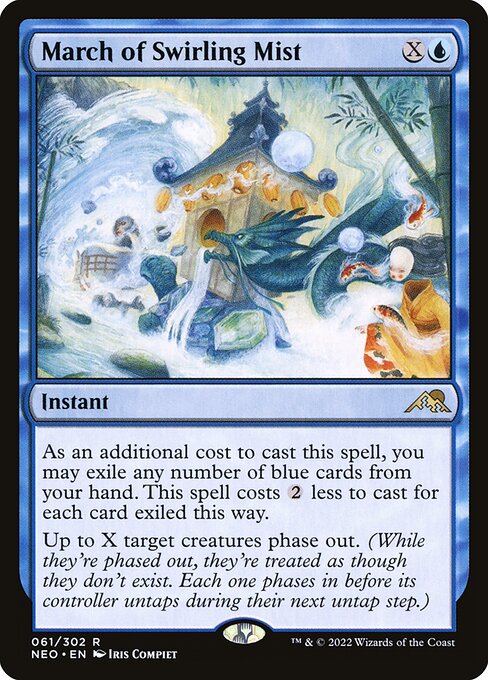
PhasingPhasing is a static ability that modifies the rules of the untap step. During each player’s untap step, before the active player untaps permanents, all phased-in permanents with phasing that player controls “phase out.” Simultaneously, all phased-out permanents that had phased out under that player’s control “phase in.”
If a permanent phases out, its status changes to “phased out.” Except for rules and effects that specifically mention phased-out permanents, a phased-out permanent is treated as though it does not exist. It can’t affect or be affected by anything else in the game. A permanent that phases out is removed from combat. (See rule 506.4.)
If a permanent phases in, its status changes to “phased in.” The game once again treats it as though it exists.
The phasing event doesn’t actually cause a permanent to change zones or control, even though it’s treated as though it’s not on the battlefield and not under its controller’s control while it’s phased out. Zone-change triggers don’t trigger when a permanent phases in or out. Tokens continue to exist on the battlefield while phased out. Counters and stickers remain on a permanent while it’s phased out. Effects that check a phased-in permanent’s history won’t treat the phasing event as having caused the permanent to leave or enter the battlefield or its controller’s control.
If a continuous effect generated by the resolution of a spell or ability modifies the characteristics or changes the controller of any objects, a phased-out permanent won’t be included in the set of affected objects. This includes continuous effects that reference the permanent specifically, unless they also specifically refer to the permanent as phased out.
Continuous effects that affect a phased-out permanent may expire while that permanent is phased out. If so, they will no longer affect that permanent once it’s phased in. In particular, effects with “for as long as” durations that track that permanent (see rule 611.2b) end when that permanent phases out because they can no longer see it.
When a permanent phases out, any Auras, Equipment, or Fortifications attached to that permanent phase out at the same time. This alternate way of phasing out is known as phasing out “indirectly.” An Aura, Equipment, or Fortification that phased out indirectly won’t phase in by itself, but instead phases in along with the permanent it’s attached to.
If an object would simultaneously phase out directly and indirectly, it just phases out indirectly.
An Aura, Equipment, or Fortification that phased out directly will phase in attached to the object or player it was attached to when it phased out, if that object is still in the same zone or that player is still in the game. If not, that Aura, Equipment, or Fortification phases in unattached. State-based actions apply as appropriate. (See rules 704.5m and 704.5n.)
Abilities that trigger when a permanent becomes attached or unattached from an object or player don’t trigger when that permanent phases in or out.
Phased-out permanents owned by a player who leaves the game also leave the game. This doesn’t cause zone-change abilities to trigger. See rule 800.4.
If an effect causes a player to skip their untap step, the phasing event simply doesn’t occur that turn.
In a multiplayer game, game rules may cause a phased-out permanent to leave the game or to be exiled once a player leaves the game. (See rules 800.4a and 800.4c.) If a phased-out permanent phased out under the control of a player who has left the game, that permanent phases in during the next untap step after that player’s next turn would have begun.
Multiple instances of phasing on the same permanent are redundant. (CR 702.26) (This phases in or out before you untapTo untap a permanent, rotate it back to the upright position from a sideways position. Only tapped permanents can be untapped. (CR 701.26) during each of your untapTo untap a permanent, rotate it back to the upright position from a sideways position. Only tapped permanents can be untapped. (CR 701.26) steps. While it's phased out, it's treated as though it doesn't exist.)
At the beginning of your upkeep, all lands you control phase out. (They phase in before you untapTo untap a permanent, rotate it back to the upright position from a sideways position. Only tapped permanents can be untapped. (CR 701.26) during your next untapTo untap a permanent, rotate it back to the upright position from a sideways position. Only tapped permanents can be untapped. (CR 701.26) step.)
$5.89
Commander: LegalModern: Not legal
Save this card
Log in to save cards to your lists.
Start a deck with this cardTags and classifications
Card attributes are distinct from extracted ability facts and inferred themes. AI themes and predicted tags are suggestions, not rules text.
Ability tags
Mana costs
Creature kinds
Color identity
Keyword tags
Mana value
Timing tags
Type tags
Predicted tags are currently unavailable.