Enchantment // Land — Cave
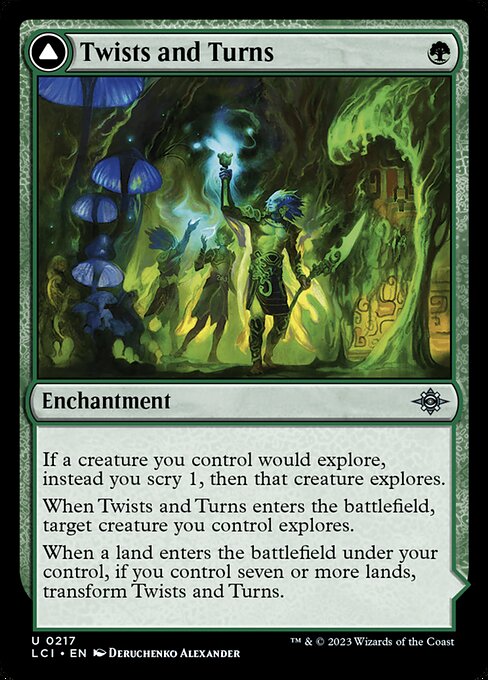
If a creature you control would exploreCertain spells and abilities instruct a permanent to explore. To do so, that permanent’s controller reveals the top card of their library. If a land card is revealed this way, that player puts that card into their hand. Otherwise, that player puts a +1/+1 counter on the exploring permanent and may put the revealed card into their graveyard.
A permanent “explores” after the process described in rule 701.44a is complete, even if some or all of those actions were impossible.
If a permanent is no longer on the battlefield as an effect instructs it to explore, its last known information is used to determine which object explored and who controlled it.
If multiple permanents are instructed to explore at the same time, the first player in APNAP order who controls (or, in the case of a permanent no longer on the battlefield, last controlled; see rule 701.44c) one or more of those permanents chooses one of them and it explores. Then this process is repeated for each remaining instruction to explore. (CR 701.44), instead you scryTo “scry N” means to look at the top N cards of your library, then put any number of them on the bottom of your library in any order and the rest on top of your library in any order.
If a player is instructed to scry 0, no scry event occurs. Abilities that trigger whenever a player scries won’t trigger.
If multiple players scry at once, each of those players looks at the top cards of their library at the same time. Those players decide in APNAP order (see rule 101.4) where to put those cards, then those cards move at the same time.
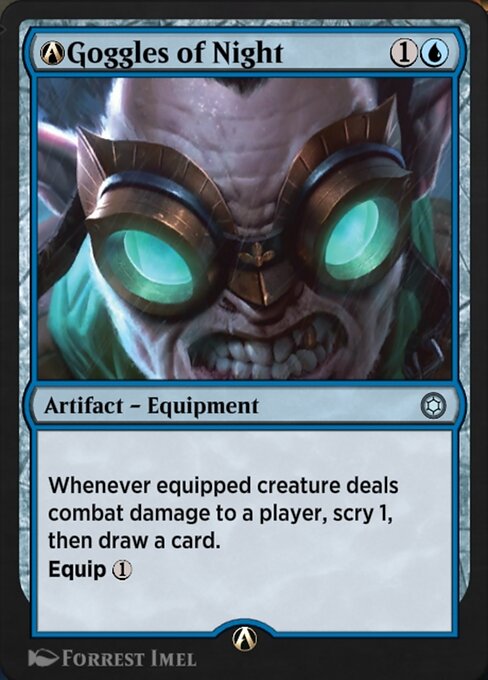
An ability that triggers whenever a player scries triggers after the process described in rule 701.22a is complete, even if some or all of those actions were impossible. (CR 701.22) 1, then that creature explores.
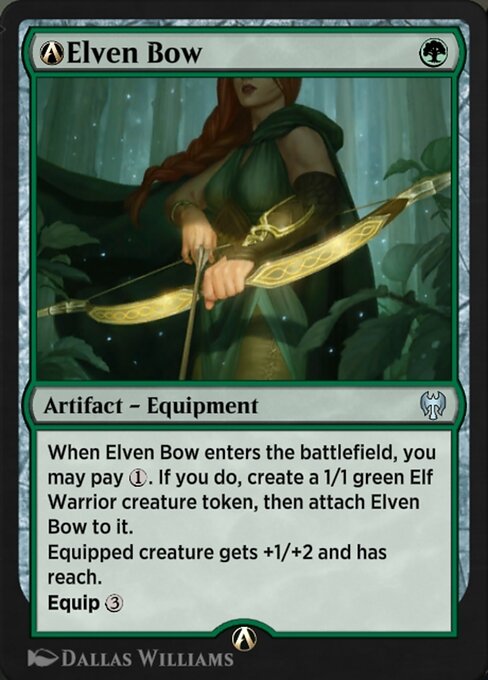
When this enchantment enters, target creature you control explores.
When a land you control enters, if you control seven or more lands, transformTo transform a permanent, turn it over so that its other face is up. Only permanents represented by double-faced tokens and double-faced cards can transform. (See rule 712, “Double-Faced Cards.”)
Although transforming a permanent uses the same physical action as turning a permanent face up or face down, they are different game actions. Abilities that trigger when a permanent is turned face down won’t trigger when that permanent transforms, and so on.
If a spell or ability instructs a player to transform a permanent that isn’t represented by a double-faced token or a double-faced card, nothing happens.
If a spell or ability instructs a player to transform a permanent, and the face that permanent would transform into is an instant or sorcery face nothing happens.
Some triggered abilities trigger when an object “transforms into” an object with a specified characteristic. Such an ability triggers if the object either transforms or converts (see rule 701.28) and has the specified characteristic immediately after it does so.
If an activated or triggered ability of a permanent that isn’t a delayed triggered ability of that permanent tries to transform it, the permanent does so only if it hasn’t transformed or converted since the ability was put onto the stack. If a delayed triggered ability of a permanent tries to transform that permanent, the permanent does so only if it hasn’t transformed or converted since that delayed triggered ability was created. In both cases, if the permanent has already transformed or converted, an instruction to do either is ignored.
Some spells and abilities refer to a “transformed permanent.” This phrase refers to a double-faced permanent on the battlefield with its back face up. A permanent with its front face up is never considered a transformed permanent, even if it had its back face up previously. Similarly, an object represented by more than one card, such as a melded or merged permanent, is never considered a transformed permanent, even if it has components that are back face up. See rules 701.42, “Meld,” and 730, “Merging with Permanents.” (CR 701.27) this enchantment. // (Transforms from Twists and Turns.)
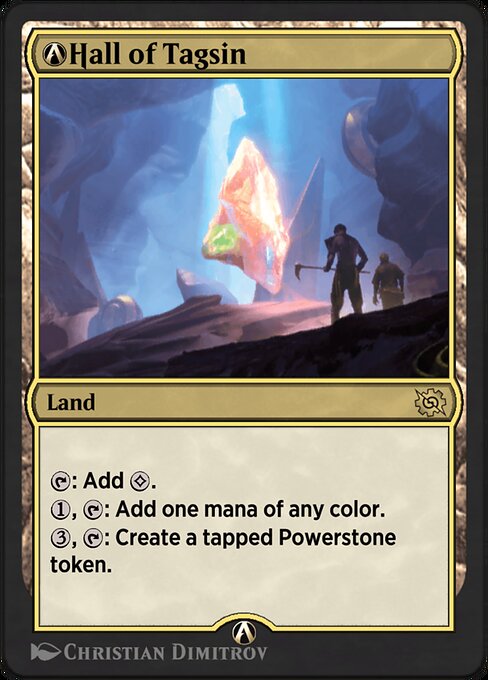
: Add .
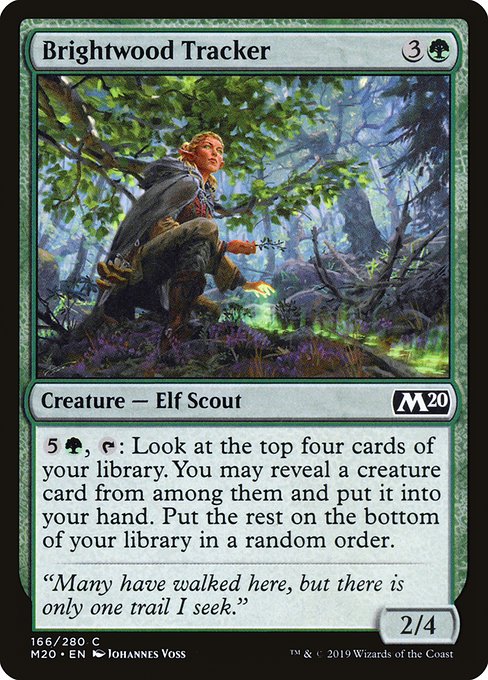
, : Look at the top four cards of your library. You may revealTo reveal a card, show that card to all players for a brief time. If an effect causes a card to be revealed, it remains revealed for as long as necessary to complete the parts of the effect that card is relevant to. If the cost to cast a spell or activate an ability includes revealing a card, or if a card is revealed because an ability is activated from a hidden zone (see rule 602.2a), the card remains revealed from the time the spell or ability is announced until the time it leaves the stack. If revealing a card causes a triggered ability to trigger, the card remains revealed until that triggered ability leaves the stack. If that ability isn’t put onto the stack the next time a player would receive priority, the card ceases to be revealed.
Revealing a card doesn’t cause it to leave the zone it’s in.
A card that is currently revealed may be revealed again.
If cards in a player’s library are shuffled or otherwise reordered, any revealed cards that are reordered stop being revealed and become new objects.
Some effects instruct a player to look at one or more cards. Looking at a card follows the same rules as revealing a card, except that the card is shown only to the specified player. (CR 701.20) a creature card from among them and put that card into your hand. Put the rest on the bottom of your library in a random order.
$0.25
Commander: LegalModern: Legal
Save this card
Log in to save cards to your lists.
Start a deck with this cardTags and classifications
Card attributes are distinct from extracted ability facts and inferred themes. AI themes and predicted tags are suggestions, not rules text.
Ability tags
Mana costs
Color identity
Keyword tags
Mana value
Timing tags
Type tags
Predicted tags are currently unavailable.