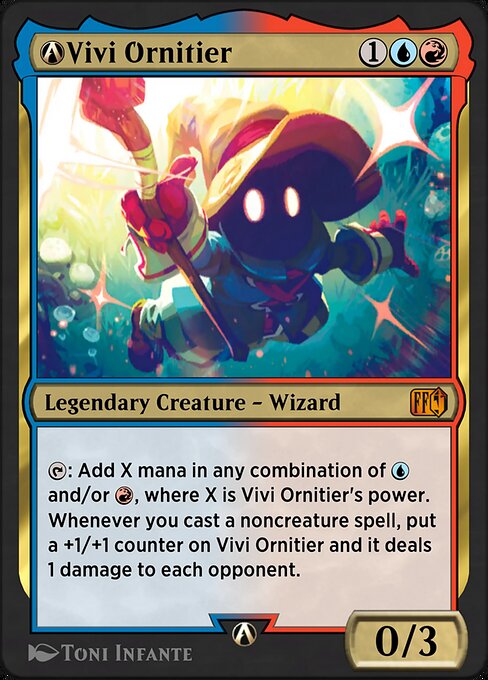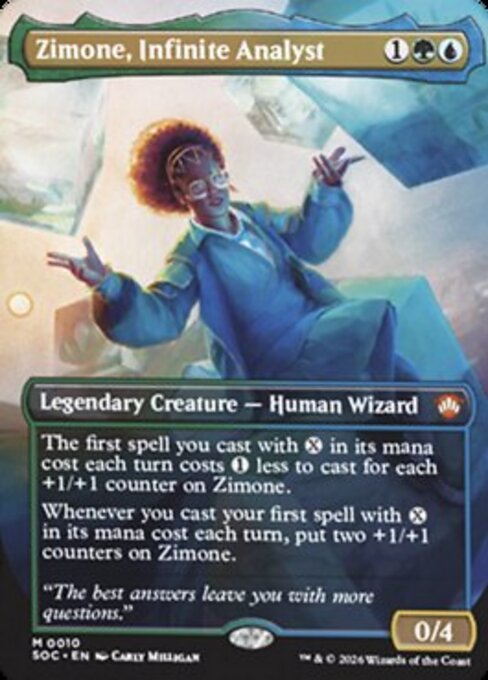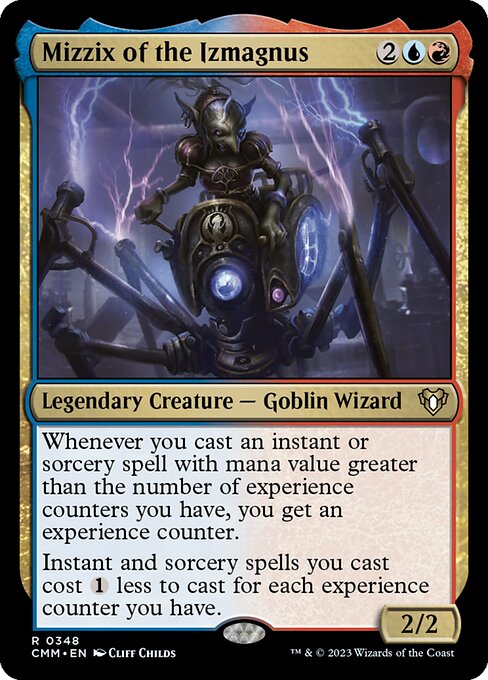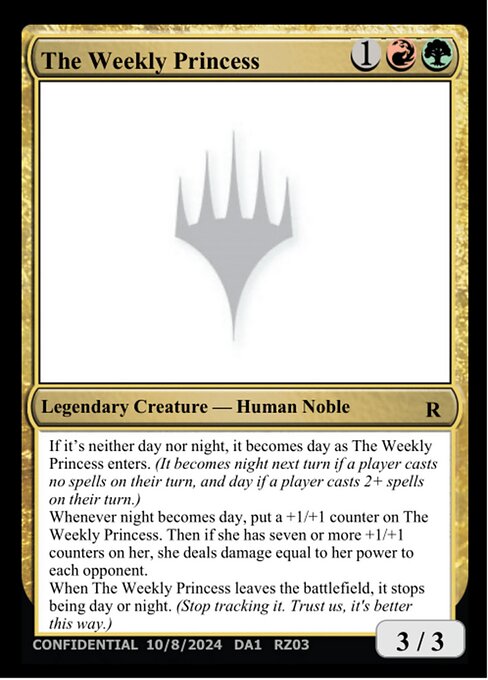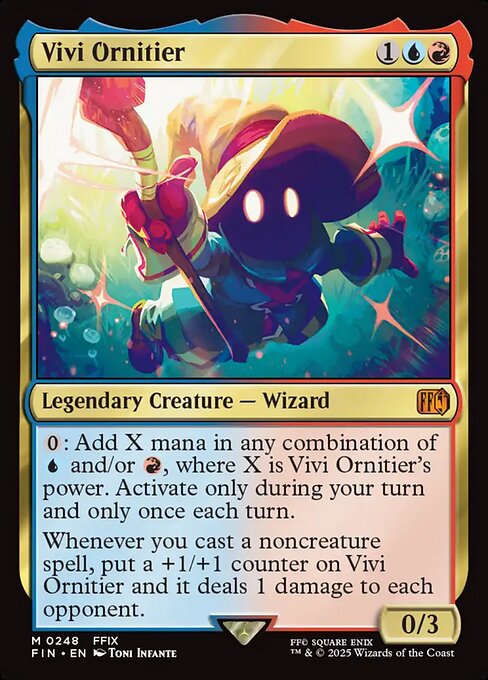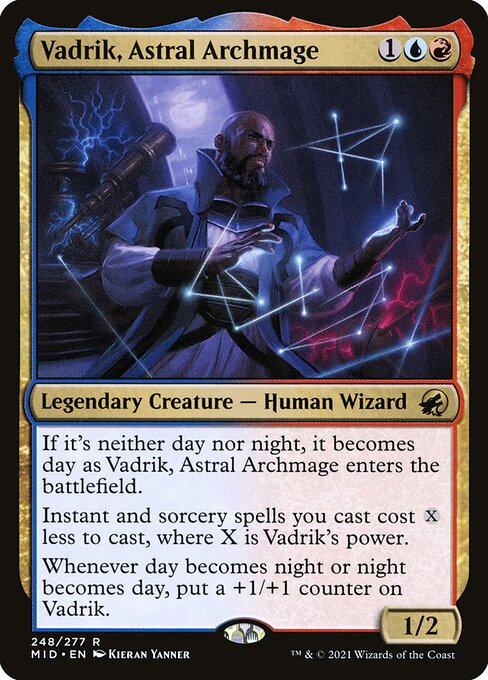
Legendary Creature — Human Wizard
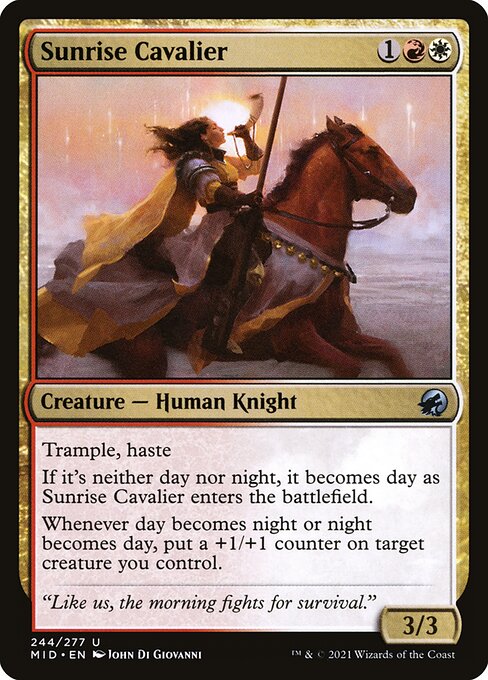
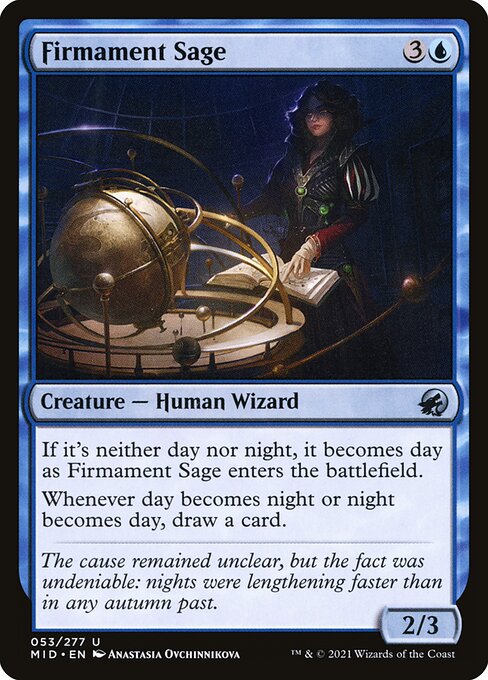
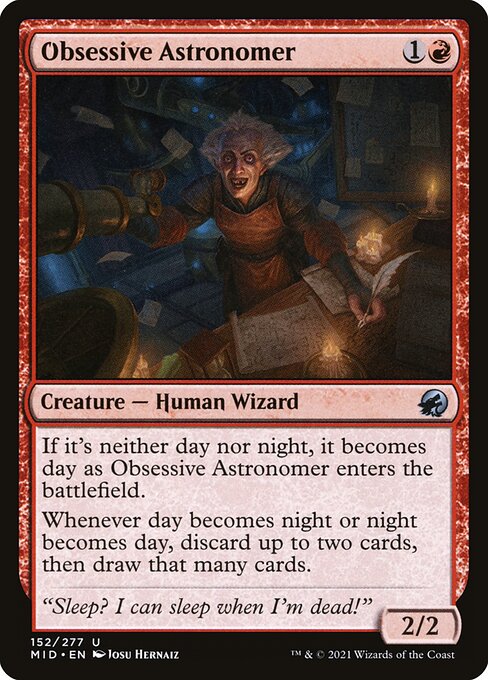
If it's neither dayIf it’s day and the previous turn’s active player didn’t cast any spells during that turn, it becomes night. Multiplayer games using the shared team turns option (see rule 805) use a modified rule: if it’s day and no player from the previous turn’s active team cast a spell during that turn, it becomes night. (CR 731.2a) nor nightIf it’s night, and previous turn’s active player cast two or more spells during the previous turn, it becomes day. Multiplayer games using the shared team turns option (see rule 805) use a modified rule: if it’s night and any player from the previous turn’s active team cast two or more spells during that turn, it becomes day. (CR 731.2b), it becomes dayIf it’s day and the previous turn’s active player didn’t cast any spells during that turn, it becomes night. Multiplayer games using the shared team turns option (see rule 805) use a modified rule: if it’s day and no player from the previous turn’s active team cast a spell during that turn, it becomes night. (CR 731.2a) as Vadrik enters.
Instant and sorcery spells you castTo cast a spell is to take it from the zone it’s in (usually the hand), put it on the stack, and pay its costs, so that it will eventually resolve and have its effect. A player may cast a spell if they have priority. See rule 601, “Casting Spells.”
To cast a card is to cast it as a spell. (CR 701.5) cost less to castTo cast a spell is to take it from the zone it’s in (usually the hand), put it on the stack, and pay its costs, so that it will eventually resolve and have its effect. A player may cast a spell if they have priority. See rule 601, “Casting Spells.”
To cast a card is to cast it as a spell. (CR 701.5), where X is Vadrik's power.
Whenever dayIf it’s day and the previous turn’s active player didn’t cast any spells during that turn, it becomes night. Multiplayer games using the shared team turns option (see rule 805) use a modified rule: if it’s day and no player from the previous turn’s active team cast a spell during that turn, it becomes night. (CR 731.2a) becomes nightIf it’s night, and previous turn’s active player cast two or more spells during the previous turn, it becomes day. Multiplayer games using the shared team turns option (see rule 805) use a modified rule: if it’s night and any player from the previous turn’s active team cast two or more spells during that turn, it becomes day. (CR 731.2b) or nightIf it’s night, and previous turn’s active player cast two or more spells during the previous turn, it becomes day. Multiplayer games using the shared team turns option (see rule 805) use a modified rule: if it’s night and any player from the previous turn’s active team cast two or more spells during that turn, it becomes day. (CR 731.2b) becomes dayIf it’s day and the previous turn’s active player didn’t cast any spells during that turn, it becomes night. Multiplayer games using the shared team turns option (see rule 805) use a modified rule: if it’s day and no player from the previous turn’s active team cast a spell during that turn, it becomes night. (CR 731.2a), put a +1/+1 counterTo counter a spell or ability is to cancel it: remove it from the stack without resolving it. A counter on an object or player is instead a marker that changes characteristics or interacts with rules or abilities; for example, a +1/+1 counter modifies a creature’s power and toughness. (CR 701.6; 122.1) on Vadrik.
$0.35
Commander: LegalModern: Legal
Save this card
Log in to save cards to your lists.
Start a deck with this cardTags and classifications
Card attributes are distinct from extracted ability facts and inferred themes. AI themes and predicted tags are suggestions, not rules text.
Ability tags
Mana costs
Creature kinds
Classes and roles
Color identity
Mana value
Theme tags
Timing tags
Type tags
Predicted tags are currently unavailable.