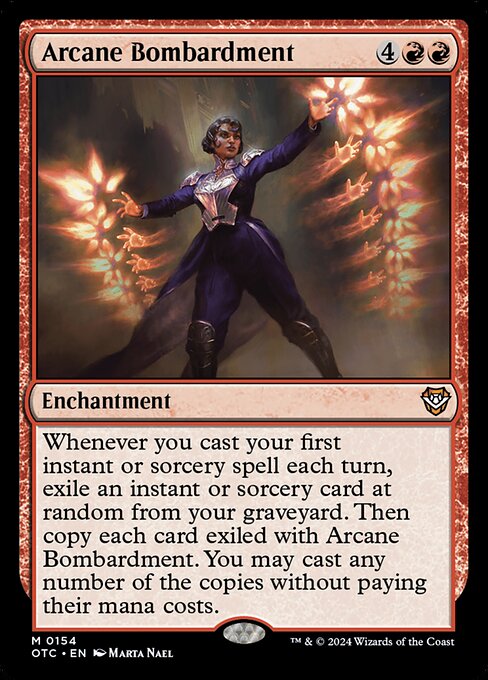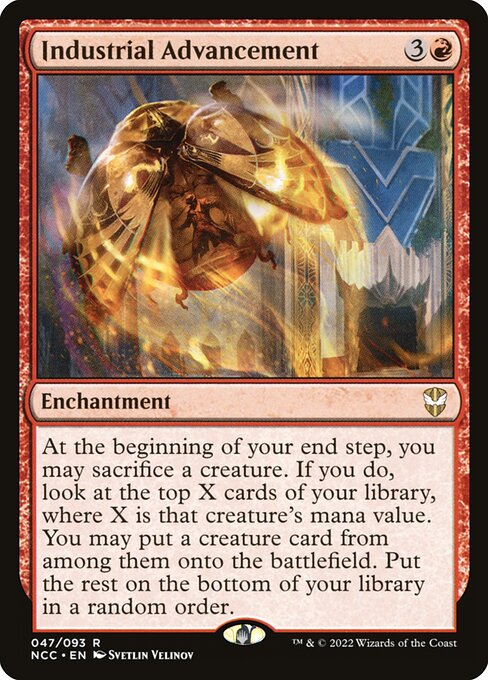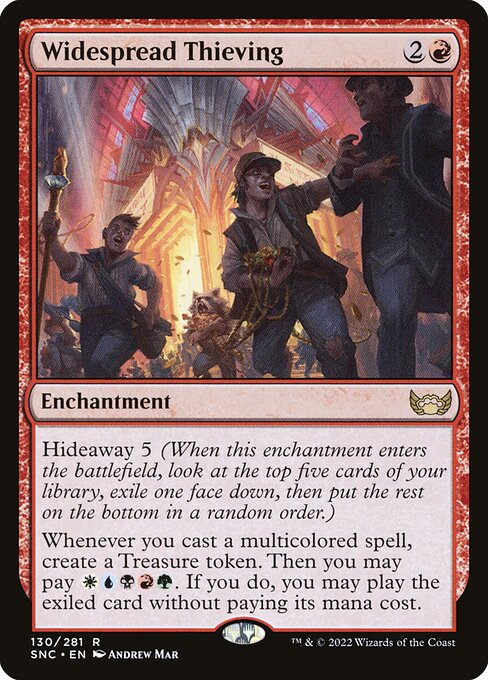
Enchantment
HideawayHideaway is a triggered ability. “Hideaway N” means “When this permanent enters, look at the top N cards of your library. Exile one of them face down and put the rest on the bottom of your library in a random order. The exiled card gains ‘The player who controls the permanent that exiled this card may look at this card in the exile zone.’”
Previously, the rules for the hideaway ability caused the permanent to enter the battlefield tapped, and the number of cards the player looked at was fixed at four. Cards printed before this rules change had the printed text “Hideaway” with no numeral after the word. Those older cards have received errata in the Oracle card reference to have “Hideaway 4” and the additional ability “[This permanent] enters tapped.” (CR 702.75) 5 (When this enchantment enters, look at the top five cards of your library, exileTo exile an object, move it to the exile zone from wherever it is. See rule 406, “Exile.” (CR 701.13) one face down, then put the rest on the bottom in a random order.)
Whenever you castTo cast a spell is to take it from the zone it’s in (usually the hand), put it on the stack, and pay its costs, so that it will eventually resolve and have its effect. A player may cast a spell if they have priority. See rule 601, “Casting Spells.”
To cast a card is to cast it as a spell. (CR 701.5) a multicolored spell, createTo create one or more tokens with certain characteristics, put the specified number of tokens with the specified characteristics onto the battlefield.
If a replacement effect applies to a token being created, that effect applies before considering any continuous effects that will modify the characteristics of that token. If a replacement effect applies to a token entering the battlefield, that effect applies after considering any continuous effects that will modify the characteristics of that token.
Previously, an effect that created tokens instructed a player to “put [those tokens] onto the battlefield.” Cards that were printed with that text have received errata in the Oracle card reference so they now “create” those tokens. (CR 701.7) a Treasure tokenA colorless artifact token: tap, sacrifice it to add one mana of any color. (CR 111.10). Then you may pay . If you do, you may playTo play a land means to put it onto the battlefield from the zone it’s in (usually the hand). A player may play a land if they have priority, it’s the main phase of their turn, the stack is empty, and they haven’t played a land this turn. Playing a land is a special action (see rule 116), so it doesn’t use the stack; it simply happens. Putting a land onto the battlefield as the result of a spell or ability isn’t the same as playing a land. See rule 305, “Lands.”
To play a card means to play that card as a land or to cast that card as a spell, whichever is appropriate.
Some effects instruct a player to “play” with a certain aspect of the game changed, such as “Play with the top card of your library revealed.” “Play” in this sense means to play the Magic game.
Previously, the action of casting a spell, or casting a card as a spell, was referred to on cards as “playing” that spell or that card. Cards that were printed with that text have received errata in the Oracle card reference so they now refer to “casting” that spell or that card.
Previously, the action of using an activated ability was referred to on cards as “playing” that ability. Cards that were printed with that text have received errata in the Oracle card reference so they now refer to “activating” that ability. (CR 701.18) the exiled card without paying its mana cost.
$0.32
Commander: LegalModern: Legal
Save this card
Log in to save cards to your lists.
Start a deck with this cardTags and classifications
Card attributes are distinct from extracted ability facts and inferred themes. AI themes and predicted tags are suggestions, not rules text.
Ability tags
Mana costs
Color identity
Keyword tags
Mana value
Timing tags
Type tags
Predicted tags are currently unavailable.